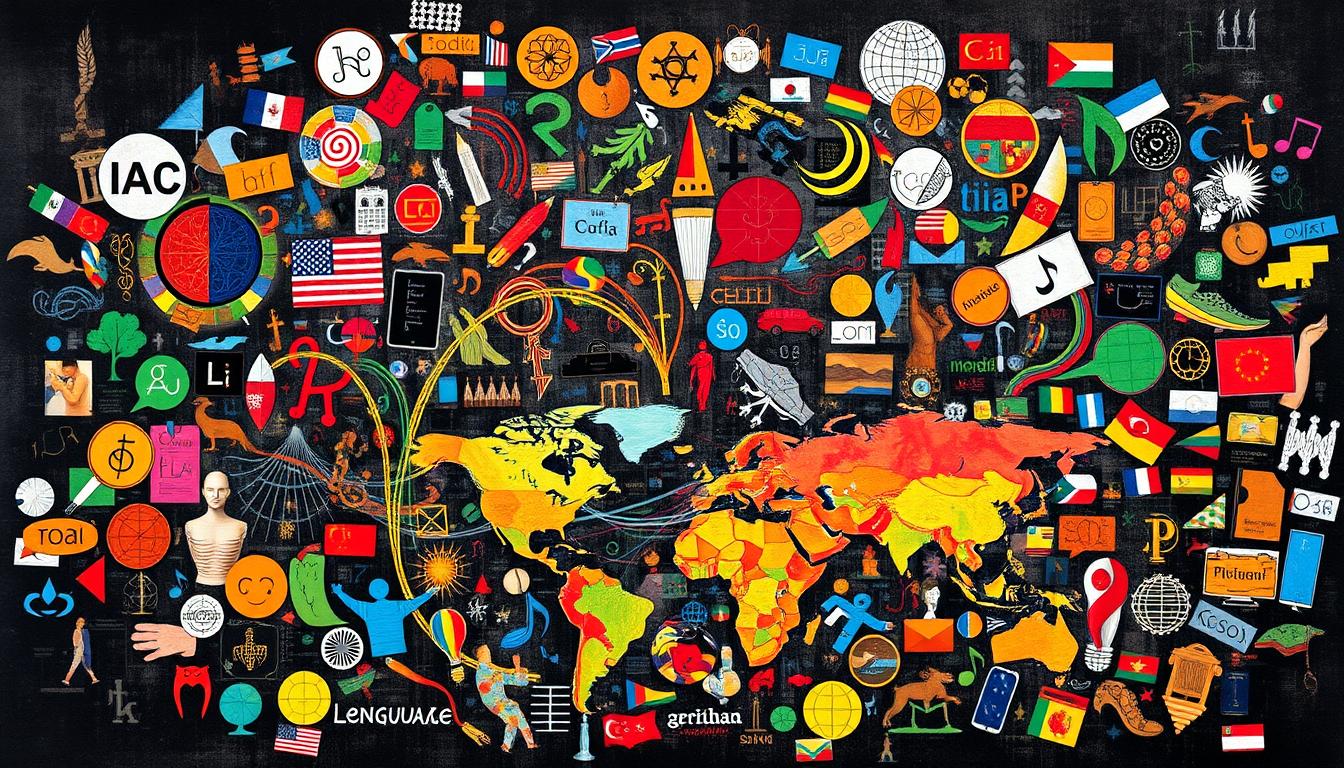
Language connects us all, weaving cultures together. It reveals the secrets of how we communicate. From ancient languages to modern ones, it’s a world full of wonder. Let’s explore the Language Fun, word games, and linguistic phenomena that make our world so interesting.
Language is more than just talking. It shows the depth and variety of human life. We’ll dive into the amazing facts about languages, from common to rare ones.
Asian languages have complex tones, African ones click, and indigenous ones have unique grammar. This shows how creative and smart humans are. Get ready to be amazed by the word games and linguistic phenomena in language learning.
The Diversity of Languages
The world is full of different languages, each with its own unique sound and style. Mandarin’s melodic tones and Khoikhoi’s clicks show the amazing variety of human communication. This variety shows how creative and clever we are.
Language fun comes from the puns and idioms in different cultures. A simple phrase can mean a lot in some languages. In others, one word can say a lot. This diversity makes learning languages fun and shows the world from different views.
“The limits of my language mean the limits of my world.” – Ludwig Wittgenstein
There are over 7,000 languages spoken around the world. Some are very rare and found in far-off places. These languages help us understand how humans have communicated over time.

Exploring the many languages of the world shows us the beauty and complexity of human expression. Whether learning new puns and idioms or just enjoying the variety, Language Fun is endless and fascinating.
The Role of Language in Culture
Language is at the heart of culture, connecting our traditions, values, and how we interact. It’s a strong tool that shows and shapes a community’s identity. From slang to cultural idioms, language lets us see a culture’s soul.
Exploring language learning activities reveals a world of cultural variety. Each language has its own cultural references, metaphors, and views of the world. By diving into these languages, we learn to appreciate the diversity of human experience.
“Language is not just a vehicle of thought, but a shaper of thought.” – Elliot Aronson
Language, from haikus to local idioms, opens doors to understanding a culture’s values and traditions. It’s how we see the world and share our unique views.
Exploring the link between language and culture deepens our respect for human diversity. By embracing language’s richness, we invite cultural exploration and personal growth.
Language Evolution Over Time
The study of language history is truly captivating. It spans from the ancient Proto-Indo-European to today’s fast-changing languages. Language Fun and wordplay have been key in this journey. They show how people have always sought creative ways to share their thoughts.
Digital communication has greatly influenced language. The quick sharing of info and social media have brought new words and ways to write. These changes have made Language Fun even more exciting. They’ve also made us rethink old rules of grammar and spelling.
“Language is a living, breathing entity, constantly evolving to meet the needs of its speakers. As the world around us changes, so too does the way we express ourselves.”
Even with all these changes, language’s core remains the same. Wordplay and creativity in language are still alive and well. People keep finding new ways to share their feelings and stories. This shows language’s lasting power and our endless interest in how to communicate.

Fun Facts About Language Usage
Explore the exciting world of language fun and discover interesting facts about words. From the most spoken languages to the longest and shortest words, language is amazing.
Did you know Mandarin Chinese is the most spoken language, with over 1.3 billion speakers? On the other hand, Welsh tongue twisters are a challenge, even for the best speakers.
“The sixth sick sheik’s sixth sheep’s sick.” – A classic English tongue twister that playfully twists the tongue as you try to recite it.
Language lovers will enjoy the wide range of words in different languages. The Piraha language in the Amazon has only 300 words. In contrast, Inuit languages have over 50 words for “snow.” These examples show how creative and flexible human language is.

If you love words or just enjoy language, these language fun facts will fascinate you. They’ll make you appreciate the power of our words even more.
Unique Language Features
There are many languages around the world, each with its own special features. Some languages don’t have consonants, while others have sounds like clicks. These unique aspects show how diverse and creative human communication can be.
The Pirahã language is spoken by a small tribe in the Amazon. It’s known for not having numbers, a calendar, or color terms. Its sound system is also special, with words that don’t have consonants. *Language puzzles* like this make us rethink what we know about language and how flexible our minds can be.
The Taa language, from Botswana, uses clicks as consonants. These sounds are made by sucking air into the mouth. *Multilingual puns* with clicks are fun and show how language can be creative.

These special language features remind us that language is always changing. By looking at the many languages out there, we learn more about our minds and the endless ways we can express ourselves.
Language and Communication
Language is key to sharing our thoughts and feelings. It’s more than just words, though. Body language, gestures, and facial expressions also tell us a lot.
In different cultures, slang expressions and language learning activities change how we talk. Slang adds flavor and shows how language evolves. Learning new languages helps us appreciate how people communicate in various ways.
“The most important thing in communication is to hear what isn’t being said.” – Peter Drucker
It’s vital to understand the non-verbal parts of communication, especially when talking to people from other cultures. A simple gesture can mean a lot more than words. Paying attention to these cues helps us connect better with others.
The link between language and communication is complex and rich. By looking at both words and body language, we can truly grasp how we connect with each other. This understanding helps us appreciate the many ways we share our thoughts and feelings.
Language Preservation Efforts
The world is getting more global, making it vital to save endangered languages. Language holds cultural heritage, traditional knowledge, and unique views. Sadly, many languages are at risk, with nearly half of the world’s 7,000 languages facing extinction by 2100.
But, there are great efforts to save these languages. Groups like the Endangered Languages Project and UNESCO are documenting and promoting endangered languages. They use language learning, cultural immersion, and revitalization to keep linguistic diversity alive.
“Language is the road map of a culture. It tells you where its people come from and where they are going.” – Rita Mae Brown
Indigenous communities are also working hard to save their languages. In the Americas, Australia, and parts of Asia, they run language nests and schools. These programs teach the next generation to speak their ancestral languages, preserving cultural heritage and identity.
Preserving endangered languages is key to a more inclusive world. By saving linguistic diversity, we honor our planet’s cultural richness. We also ensure that these languages continue to enrich our language learning activities and our understanding of humanity.
Technology and Language Learning
In today’s digital age, technology has changed how we learn languages. Apps and virtual reality tools make learning fun and easy for everyone. These tools offer lots of language learning activities and wordplay that excite students of all ages.
Modern tech lets learning fit each person’s needs. Smart software adjusts lessons based on what each student can do. This way, everyone learns at their own speed and gets better at speaking.
“Technology has opened up a world of possibilities for language learners, making the journey more enjoyable and rewarding than ever before.”
Virtual reality (VR) is also changing language learning. It lets learners practice in real-like settings. This makes them better at understanding and speaking.
Also, mobile devices have led to many language learning apps. These apps offer games and tools for talking. They make learning languages easy and fun, fitting into daily life.
As tech keeps getting better, language learning will keep getting more exciting. By using these new tools, both teachers and students can explore more in language learning.
Future of Language
Exploring the world of languages is truly captivating. It makes us think about the future of how we communicate. With the world getting smaller, we see new ways to talk, share, and laugh together through Language Fun and multilingual puns.
Experts predict that global languages will become more common. English or Mandarin Chinese might become the main language everyone uses. This could make it easier for people from different cultures to work and talk together. Imagine a world where Language Fun and puns bring everyone closer, no matter where they’re from.
Artificial intelligence (AI) is also changing how we see language. AI tools and virtual helpers are getting better at translating and understanding different languages. This could make it simpler for us to talk and laugh in many languages. It might lead to a future where everyone can share and enjoy Language Fun and puns together.