The human body is incredibly complex and full of interesting facts. It has amazing systems like the heart pumping blood and the brain storing data. The body’s networks of blood vessels, muscles, and bones are truly remarkable.
We will look into the human body’s amazing abilities and surprising facts. From saliva production to brain activity during sleep, we’ll explore the body’s fascinating features. We’ll highlight the most interesting and little-known facts about the human body.
The Amazing Human Body: An Introduction to Nature’s Masterpiece
The human body is incredibly complex and fascinating. It has many amazing facts that keep us curious. From the detailed systems that control our body to the surprising facts about its abilities, it’s truly a marvel of nature.
Scientists and artists have always been interested in the human body. Leonardo da Vinci made big contributions to understanding anatomy. His famous Vitruvian Man shows how he grasped the body’s proportions and movements.
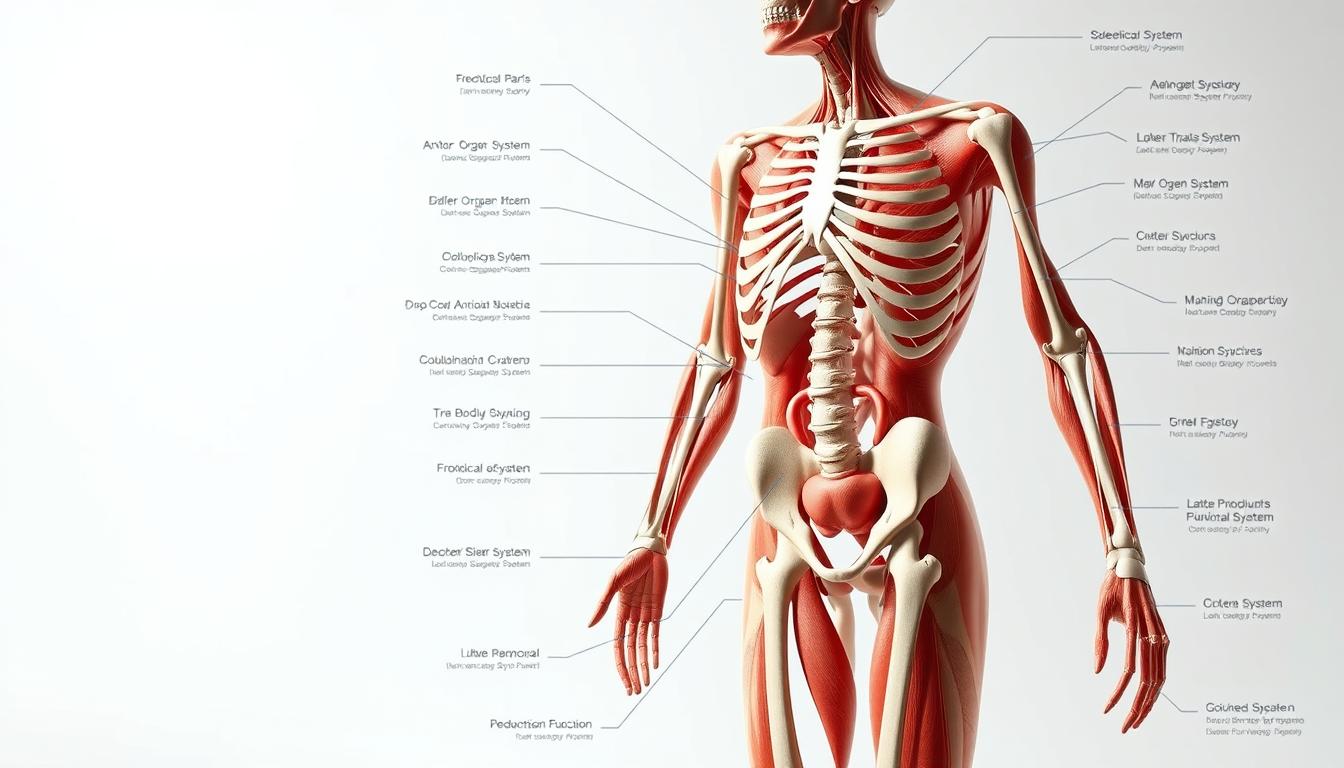
Exploring the human body reveals its incredible abilities. From the skeleton to the muscles, brain, heart, and lungs, each part is essential. By studying human biology, we learn about its functions and systems. This helps us appreciate the body’s complexity and beauty.
Extraordinary Human Body Facts That Will Surprise You
Our bodies are full of amazing body facts that amaze us. For example, our intestines are about 25 feet long. The small intestine is over 20 feet, and the large intestine is around 5 feet. This shows how important our intestines are for digestion.
Another interesting fact is that our mouths have a lot of bacteria. Some say there’s more bacteria in one mouth than people on Earth. This shows why keeping our mouths clean is so important. Also, we make about 2 liters of saliva every day. This is enough to fill a big soda bottle, showing how vital saliva is for digestion.

Exploring more human body facts, we learn our bodies make over 25 million new cells every second. This shows how complex and efficient our bodies are. As we learn more about our bodies, we realize how amazing they are.
By being curious about interesting facts about our bodies, we learn more about ourselves. This helps us understand how our bodies work and how to take care of them. It also makes us appreciate the beauty of human biology and respect our incredible bodies.
Your Brain’s Hidden Talents and Mysteries
The human brain is incredibly complex and full of surprises. It can do amazing things and control our bodies. Let’s explore its hidden talents and mysteries.
The brain can store a lot of data, like 2.5 million gigabytes. That’s more than an iPhone 7 can hold. People have up to 70,000 thoughts a day. Men’s brains are slightly bigger, but intelligence is the same for both genders.
Women have more gray matter in their brains. But men use more of it. Brain studies show that love makes certain areas of the brain work harder. The part of the brain that makes decisions doesn’t fully grow until we’re 25.
Starting in our late twenties, our brains can start to decline. But, exercise can help slow down this aging. The brain works faster than a Formula 1 car, processing information at 268 mph.
Without oxygen for five minutes, brain cells start to die. The brain is mostly fat and weighs about 1,336 grams in men. It’s the largest part of the brain, and each one is unique.
One study found that the brain has about 86 billion neurons, not 100 billion. The female brain weighs about 1,198 grams. Women have more gray matter but use less of it. Intelligence is the same for both genders.
Research shows that we use both sides of our brain equally. The brain is mostly fat and uses a lot of energy. It processes information incredibly fast, at about 268 miles per hour.
Studies say we use both sides of our brain equally. The brain is mostly fat and has a unique structure. It evolved about 40,000 to 50,000 years ago.
The brain has about 86 billion neurons. It works faster than a Formula 1 car. It uses a quarter of our body’s energy and is mostly fat.
The Heart: More Than Just a Pump
The human heart is truly amazing. It beats over 100,000 times a day. This means it pumps about 1.5 gallons of blood every minute. That’s around 2,000 gallons of blood daily, traveling about 12,000 miles through our body each day.
The heart is a key part of our human anatomy. It plays a vital role in keeping us healthy by pumping blood.
There are many surprising heart facts. For instance, a woman’s heartbeat is about 8 beats per minute faster than a man’s. An adult heart is roughly the size of two hands clasped together. A child’s heart is about the size of a fist.
The human heart is incredibly complex. By studying human anatomy and heart facts, we can better appreciate its importance.
The heart works with twice the power of a sprinter’s leg muscles. Some capillaries are ten times smaller than a human hair. Blood cells must travel single-file through them.
The heart’s ability to adapt to different situations shows its incredible complexity. By exploring heart facts and human anatomy, we can understand the heart’s vital role in our bodies.
Digestive System Secrets Nobody Told You About
The human digestive system is complex and full of surprises. Did you know that about 70% of our immune system is in our gut? This shows how important it is to keep our gut healthy for our immune system.
It takes 24 to 72 hours for food to go through our digestive system. This is key for absorbing nutrients and getting rid of waste. The small intestine, over 20 feet long, is where most nutrient absorption happens.

Our digestive system also affects our mental health. About 95% of serotonin is made in the small intestine. This shows how our gut health is linked to our mental health, like anxiety and depression. Eating well and living a healthy lifestyle can help our mental and physical health.
Also, our digestive system has trillions of microbes, like bacteria and viruses. These microbes are vital for our digestive health. If the balance of these microbes gets off, we can face digestive problems. Understanding and keeping a healthy balance of these microbes is key to our digestive health.
Skin Deep: Fascinating Facts About Your Largest Organ
Human skin is a complex and fascinating organ that plays a key role in our health. It makes up about 16 percent of our body mass. The skin is about 2 millimeters thick but has a vast network of blood vessels, nerve endings, and skin cells.
This network helps regulate body temperature, produce vitamin D, and protect us from damage. It’s more than just a protective barrier.
As we age and face environmental damage, the skin’s metabolic processes slow down. This affects collagen and elastin production, leading to wrinkles and age spots. Yet, the skin can also repair and regenerate itself, with new skin cells taking about a month to reach the surface.
One square inch of skin contains about 19 million skin cells, 60,000 melanocytes, and 300 sweat glands. It also has 20 blood vessels and 1,000 nerve endings. This complex network helps maintain the skin’s barrier function, keeping irritants out and moisture in.
Understanding skin health is key. The skin’s microbiome, made up of trillions of microorganisms, helps with infection control and immune function. Taking care of our skin and maintaining a balanced microbiome can prevent many skin problems. Learning about human anatomy and skin facts reveals the amazing complexity and functions of our largest organ.
The Hidden Powers of Human Muscles and Bones
Human muscles and bones are more than just structures. They are key to our body’s function. The human body has over 600 muscles, with the gluteus maximus being the largest. This muscle helps us walk, run, and stay balanced.
Bones give muscles a place to attach, enabling us to move. They are essential for our body’s function.
Muscles can change and grow with exercise. They are made of tiny units called muscle fibers. These fibers grow and increase with regular exercise.
Bones also play a big role in our movement and function. The spine is a great example of both strength and flexibility.

The connection between muscles and bones is complex. They work together to help us move, balance, and regulate our temperature. Our body can do amazing things, from the strength of the gluteus maximus to the spine’s flexibility.
Understanding the powers of human muscles and bones shows us the beauty and complexity of human biology.
DNA and Genetic Wonders of the Human Body
The study of human DNA and genetics is both complex and fascinating. It’s filled with surprising facts and intriguing trivia. The human body has trillions of cells, with about 200 different types. It’s mostly water, making up about 60% of our weight.
The skeleton of an adult has around 206 bones. Our body has nine major organ systems. Human biology is a field that keeps growing with new discoveries and genetic research.
Genetic maps help us understand how genes work in health and disease. About 1 in 100 DNA base pairs is different between any two people. This difference helps explain why we all look and act differently.
Soon, we’ll know the genes and defects behind many diseases. This will change how we see human DNA and genetics. It will help us understand human biology better.
Genetic and molecular biology studies are growing fast. We’ll learn more in the next 20 years than in the last 2,000. This progress in genetics and human biology will help us understand the human body better.
As we learn more about human DNA and genetics, we’ll find more surprising facts. These discoveries will help us appreciate the amazing complexity of human biology.
The Incredible Symphony of Human Biology: Putting It All Together
The human body is a symphony of systems and processes. The heart pumps 2,000 gallons of blood daily. The brain has 86 billion neurons, making it a natural wonder.
The lungs have 300 million alveoli, and the small intestine is 20 feet long. The body has 206 bones for structure. Hormones, saliva, and sensory receptors in the skin are just a few of the wonders.
Reflecting on the human body fills us with wonder and appreciation. It’s a complex and resilient machine. From cells to systems, it’s a masterpiece that inspires us.