Start an exciting journey through human history with 10 interesting facts about our evolution. We’ll trace our roots and find surprising links to our primate cousins. These insights offer a fun and informative look at how modern humans came to be.
Get ready for a deep look into fossils, genes, and anthropology. These fields have revealed key moments and changes in our evolution over millions of years. Be amazed by the incredible changes and cultural steps that have shaped us.
If you love history or just wonder about where we came from, these 10 fun facts will grab your attention. Let’s dive into the story of our ancestors and the path that made us the modern humans we are today.
Uncovering Humanity’s Ancestral Roots
The story of how humans evolved is really interesting. It’s mainly told through fossils found over many years. By looking at these old bones, scientists can follow our evolutionary history. They also uncover the secrets of our ancient human ancestors.
Tracing Our Lineage Through Fossil Records
The fossil record lets us peek into the past. It shows us how our species evolved. Important finds like Australopithecus and Homo erectus fossils have changed how we see human history. These early humans give us clues about how our kind adapted and moved around.
The Fascinating Journey of Human Migrations
Our ancestors moved all over the world, leaving signs behind. These signs help us piece together the story of human migration. From Africa to other continents, these moves helped our species grow and change. By following these paths, we learn about the strength and flexibility of humans.
Learning about our past through fossils and migration stories gives us a big picture of human evolution. These insights into our early days are really interesting. They show us where our species came from.
Fun Facts About Our Evolutionary Cousins
Homo sapiens is the only human species left, but we share a rich history with other primates like Neanderthals and Denisovans. These groups show us the wide range of our ancestors.
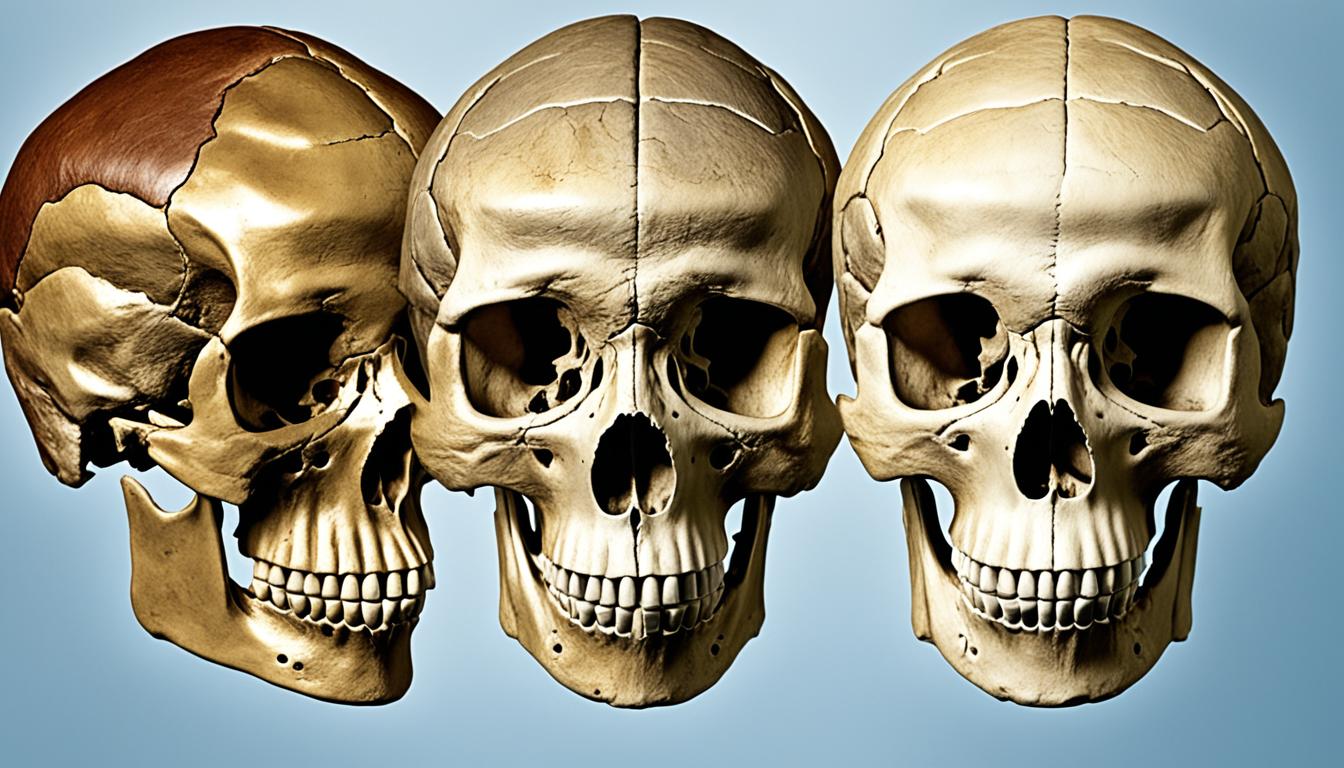
Neanderthals were our closest extinct relatives. They were strong, with big brow ridges and unique faces. They hunted, used complex tools, and even made art and buried their dead. Today, many of us still have a bit of Neanderthal DNA, showing they mixed with early humans.

The Denisovans were another ancient human group found through DNA in a finger bone. They lived with Neanderthals and early humans in Asia. Their genes are still in people today in Oceania and Southeast Asia.
Learning about Neanderthals and Denisovans helps us understand our own beginnings. It shows how diverse and adaptable our primate relatives were over time.
Busting Myths About Early Humans
Our early human ancestors were not the simple, ape-like beings often shown in movies and TV. Anthropological facts tell a more detailed and interesting story of human evolution. Let’s look at and clear up some common wrong ideas about prehistoric humans.
Debunking Myths About Human Evolution
Many think Neanderthals were dumb and savage. But, studies prove they were smart, making complex tools and living in organized societies. The idea of a straight line of evolution is wrong. Many human types lived and mixed together over time.
It’s also wrong to say early humans only hunted and gathered. They did that, but they also farmed, traded, and had complex rituals. This shows our ancestors were diverse and adaptable.
By clearing up these myths, we learn more about our ancestors and human evolution. We see the strength, adaptability, and creativity of our ancient relatives. This helps us value their legacy more.
The Adaptations That Shaped Our Species
The journey of human evolution is filled with key adaptations that helped us succeed. One major change was becoming bipedal, or walking on two legs. This change let our hands be free for making tools and other tasks. It also changed our bones and muscles a lot.
From Bipedalism to Brain Development
When our ancestors started walking upright, their bodies changed a lot. Their spine, pelvis, and legs got ready for walking upright. Their arms became better for doing things. At the same time, their brains got bigger and more complex.
This growth in the brain led to better thinking, language, and social skills. These changes from bipedalism to brain development have made us who we are today. By looking into these human evolutionary adaptations, we learn how our species has thrived over time.

Fun Facts About Our Genetic Makeup
Genetic research has uncovered amazing insights into our evolutionary history. By looking into our DNA, scientists have found a lot of information. This information helps us understand our ancestors, genetic diversity, and how we evolved over time. Let’s explore some interesting facts about the human genome and how it changes our view of human genetic evolution.
Unveiling Our DNA’s Evolutionary Secrets
Did you know our DNA holds the blueprints for our traits and our evolutionary journey? Each part of our genetic code shows the adaptations and migrations that shaped humanity. By studying these variations, researchers can tell the story of our species’ past. This helps us understand how we evolved over thousands of years.
The human genome is full of genetic diversity. This means we all have different genes, showing how evolution has shaped us. This diversity shows how adaptable we are and helps us understand our traits and behaviors.
As scientists learn more about DNA and evolution, we learn how complex and strong the human genome is. By tracing our ancestors and understanding genetic adaptation, studying our genes helps us grasp human history and evolution better.
Cultural Milestones in Human Evolution
The story of human evolution is not just about physical changes. It’s also about the amazing cultural and technological steps we’ve taken. These steps show how adaptable and creative our species is.
One big step was the start of language. Being able to talk and write changed everything. It let us share ideas, pass on knowledge, and build complex societies. This was a key moment for our growth.
Creating tools was another big step. From simple stones to today’s complex tech, we’ve always been inventive. These tools helped us change our world and shaped who we are.
As we got better at making tools and using technology, our societies got more complex. We started living in groups, divided tasks, and created governments. These changes show how adaptable and smart our ancestors were. They helped us keep evolving, both as individuals and as a group.
Surprising Similarities to Our Primate Relatives
Humans have taken a unique path in evolution, but we share many traits with our closest primate cousins, like chimpanzees and gorillas. These similarities show how our ancestors and non-human primates have evolved over millions of years.
Exploring Our Shared Evolutionary Connections
Humans and our primate relatives share many physical and behavioral traits. For example, we have a lot of DNA in common with chimpanzees, our closest living relatives. This shows how deeply connected we are to the human primate family.
Both humans and many primate species have complex social lives, use tools, and communicate in various ways. These similarities underline our shared evolutionary past.
Looking into these traits helps us understand human evolution better. It also gives us insights into the processes that have shaped the diverse primates we see today. By studying the links between humans and our primate relatives, we learn about the adaptations and environmental factors that have led to the amazing diversity of life on Earth.
The Role of Natural Selection in Shaping Humanity
Natural selection is key to human evolution. It drives the changes that make us who we are today. This process has shaped our unique traits and abilities.
It works by picking traits that help us survive in our environment. This has led to our ability to walk on two feet and think deeply. By looking at how genes and the environment work together, we see how “survival of the fittest” has shaped us.
Genetic diversity is what keeps evolution going. Natural selection picks the best traits for certain environments. This has shaped our bodies and minds, making us uniquely human.
Understanding how genes and the environment interact helps us see how we’re still evolving. This shows how natural selection keeps shaping our future.
Natural selection shows how adaptable and resilient we are as a species. It helps us understand our journey from the past to now. It also gives us clues about what might come next.