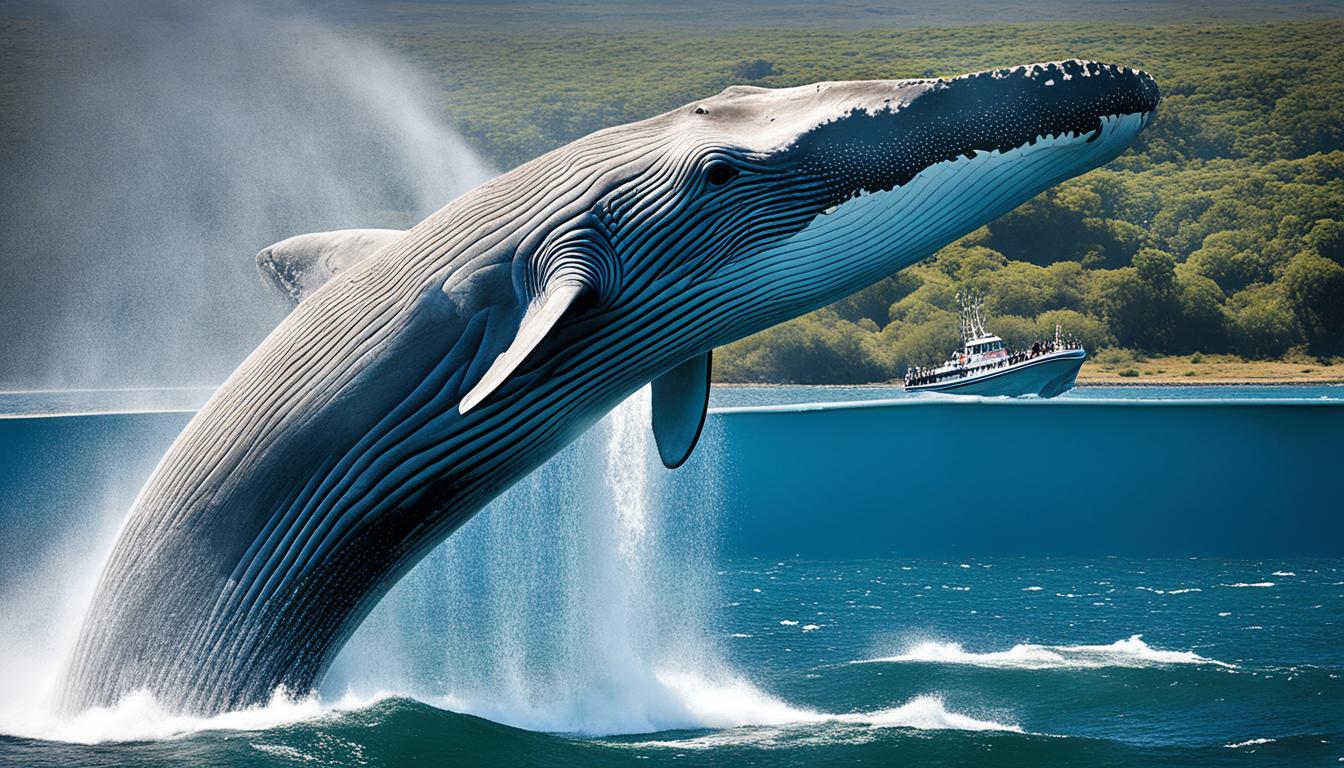
Get ready to be amazed by nature’s biggest and most incredible creatures! From the massive blue whale to the powerful African elephant, we’ll explore the world’s largest animals. You’ll find 10 fascinating facts that will make you wonder at the size and strength of these giants.
The blue whale is the biggest animal on Earth, reaching lengths of 30 meters (100 feet) and weighing over 200 metric tons. These giants make the loudest sounds in the animal world, heard up to 500 miles away.
The African elephant is the largest land mammal, standing up to 13 feet tall and weighing over 6 tons. They have great memory, remembering where hundreds of watering holes are in their huge territory.
The saltwater crocodile is the biggest reptile alive, growing up to 23 feet long and weighing over a ton. These predators have the strongest bites, with over 3,000 pounds of pressure per square inch.
The colossal squid is the largest invertebrate, reaching lengths of 43 feet and weighing over 1,000 pounds. These deep-sea creatures are the only invertebrates that can hunt prey bigger than themselves.
The giant panda is one of the rarest and most loved animals, weighing up to 300 pounds. Despite their size, they eat almost all bamboo, eating up to 40 pounds a day.
Unveiling the Marvels of Gigantic Creatures
The world is filled with giant animals, from towering titans to massive creatures. These mega fauna amaze us with their huge size and scale. They leave us in awe of nature’s biggest beasts.
From Towering Heights to Unimaginable Lengths
Picture standing next to the African elephant, one of the world’s largest animals. These giants can be as tall as 13 feet, towering over humans. Or think about the blue whale, the biggest animal on Earth, which can be 100 feet long. That’s longer than most buildings.
Looking at nature’s biggest beasts gives us a new view of life on Earth. By comparing their size to everyday objects, we see just how huge these creatures are. It’s a way to truly appreciate their amazing size.
The Majestic Blue Whale: Ruler of the Ocean Depths
Get ready to be amazed as we explore the world of the blue whale, the biggest animal on Earth. This whale is a true wonder, ruling the ocean with its huge size and strength. Its massive size and biology make it a fascinating creature.
The blue whale can grow over 80 feet long and weigh more than 200 tons. It has a huge mouth that can take in 500 gallons of water at once. This lets it eat a lot of tiny krill, its main food source.
This whale eats up to 40 million krill every day. Its size and eating habits show how vast the ocean’s resources are.
There’s more to the blue whale than just its size. It has a unique song that can be heard for miles and can dive for up to 30 minutes. These facts show how amazing this whale is. It’s the biggest animal on Earth, making it the ocean’s ruler. People all over the world find it fascinating.
Fun Facts: Exploring the Captivating World of Giants
Step into a world full of amazing animal facts and fun trivia about nature’s giants. Learn about the huge size of a blue whale’s tongue and the cool skills of the African elephant. Discover a world of unusual animal info that will amaze you.
Unraveling Astonishing Trivia About Nature’s Colossal Beings
Did you know a blue whale’s tongue can be as heavy as an elephant? Or that African elephants can hear through their feet, picking up vibrations from far away? Dive into a world of animal facts and giant trivia that shows how amazing the world’s biggest animals are.
Learn about the saltwater crocodile’s huge jaws and a gorilla’s skilled hands. Explore a world of fascinating animal info that will spark your curiosity. Discover the hidden wonders of nature’s biggest creatures and learn more about the animal kingdom’s amazing facts.
The Awe-Inspiring African Elephant: Gentle Giant of the Savanna
In the African savanna, the African elephant stands tall as the largest land animal. These gentle giants win over everyone with their size and interesting ways. Exploring their world is a journey full of wonder and discovery.
Unveiling the Marvels of the African Elephant
The African elephant is a true marvel, with traits that make it stand out. It can weigh up to 6 tons and reach over 13 feet tall. These savanna giants have big ears to keep cool and long tusks for finding food and defending themselves. They live in close family groups, led by a wise matriarch.
Learning about elephant behavior and elephant biology shows how important they are to the African savanna. As the largest land animal, they help keep the ecosystem balanced. They shape their home through their eating and moving around.
However, the African elephant faces big threats like losing its home, being hunted, and conflicts with humans. We need to work hard to protect these amazing animals. Knowing more about elephant facts helps us save their future.
Colossal Sharks: Prehistoric Predators of the Deep
The ocean’s most formidable predators are the colossal sharks. These ancient creatures have been in the seas for millions of years. They range from the fearsome megalodon, an extinct species that could grow up to 60 feet long, to the gentle whale shark, the largest fish alive today.
The great white shark is a well-known top predator. It can be up to 20 feet long and weigh over 5,000 pounds. Its sharp teeth and strong jaws let it take down prey much bigger than itself.
On the other hand, the whale shark is huge but gentle. It eats tiny plankton and small fish. It uses its big mouth and special gill rakers to filter its food from the water.
These prehistoric marine creatures have evolved amazing adaptations. They have streamlined bodies and strong tails. They also have advanced senses and hunting strategies. Giant sharks are true experts in their domain, earning respect and awe from all who see them.
The Mighty Saltwater Crocodile: Apex Predator of the Wetlands
The saltwater crocodile is the largest living reptile, towering over the wetlands. It has powerful jaws and a fearsome reputation. This makes it the king of the marshy habitats it lives in. Let’s explore the amazing world of crocodilian biology and see why the saltwater crocodile is a top predator.
Delving into the Fearsome Realm of Gargantuan Reptiles
The saltwater crocodile can grow up to 23 feet long, making it a giant among giant reptiles. Its thick, armored hide lets it overpower and eat a wide variety of prey. From fish and birds to deer and smaller crocodiles, it’s an apex predator in wetland ecosystems.
Interesting crocodile facts show how these ancient reptiles thrive. Their tails help them move fast and catch prey with ease. With sharp senses, they can spot even the slightest movement in the water, making them great wetland predators.

Towering Trees: Ancient Giants of the Forest
In the world’s lush forests, a sight awaits that’s truly remarkable – the towering giants. These ancient trees have stood for centuries, showing nature’s resilience and grandeur. They reach for the sky, their size and age leaving us in awe.
From California’s majestic sequoias to Australia’s towering eucalyptus, these trees thrive in many places. They grow to incredible heights and sizes, beyond what we can imagine.
The tallest tree, the Hyperion, reaches 380 feet high, taller than the Statue of Liberty. These trees, often called the oldest living things, have seen many changes over time. They’ve survived environmental shifts and become living records of the forest’s history.
They have thick bark that protects them from fire and complex roots that help them grow. Year after year, they keep growing, decade after decade.
Visiting the world’s oldest trees lets us see the history of the forest. We learn about the balance of nature and the strength of these trees. From the American Southwest’s bristlecone pines to the Patagonian alerce trees, they show nature’s power and evolution’s wonders.
Titanic Tarantulas: Hairy Hunters of the Amazon
Step into the Amazon rainforest and you might find some huge arachnids – the giant tarantulas. These spiders are amazing, with sizes and strength that amaze even experts.
Exploring the World of Colossal Arachnids
Giant tarantulas in the Amazon are not your typical spiders. They can grow really big, with some having leg spans over a foot long. Picture a spider as big as a large dinner plate! These spiders are top hunters, using their strong fangs and quick moves to catch insects and small rodents.
These spiders have a fascinating biology. Their hairy bodies and legs help them blend in and protect them. They can also sense even the smallest movements. If they feel threatened, they can send irritating hairs at predators.
Despite looking scary, giant tarantulas are crucial to the Amazon’s ecosystem. They keep the food web balanced by controlling smaller animals’ populations. They show how diverse and strong the Amazon’s wildlife is.
So, when you hear about the giant tarantulas of the Amazon, remember to admire these incredible creatures. They show us the wonders of nature and the amazing life in the world’s biggest tropical forest.
Massive Mollusks: Undersea Behemoths
Dive into the world of the ocean’s biggest creatures – the giant mollusks. These marine animals are amazing, with sizes that surprise us. They include the giant squid, a mystery of the deep sea, and the giant clam, the biggest of all.

The giant squid is one of the biggest invertebrates, reaching lengths over 40 feet. It has huge tentacles and sharp beaks, perfect for catching prey in the deep sea. The giant clam, on the other hand, can weigh up to 500 pounds and live over a hundred years. It feeds on plankton and lives in warm waters.
These sea giants are not just big; they’re also key to their ocean homes. They act as both hunters and prey, keeping the ocean’s balance. Learning about giant mollusks shows us the amazing variety and strength of our ocean’s creatures.
Gigantic Gorillas: Powerful Primates of the Jungle
Step into the deep African jungles and meet the eastern gorilla and mountain gorilla. These are the biggest living primates on our planet. They can be as tall as 6 feet and weigh up to 600 pounds. Despite their huge size and strength, they are gentle. They live in complex social groups and have deep family bonds.
The gorilla’s body is a wonder. Their muscles, big hands, and strong jaws help them live in tough jungle environments. These facts show how powerful these giants are. They can take bark off trees and crush fruits easily.
But, eastern gorillas and mountain gorillas are in danger. They face threats like losing their homes, being hunted, and getting sick. We need to work hard to save these amazing animals. By understanding their biology and behavior, we see why it’s vital to protect their homes.
Colossal Creatures: Marvels of Evolution’s Grandeur
The world is full of giant animals, each showing the amazing power of evolution. The blue whale, the biggest creature, and the African elephant are examples. They have adapted and thrived, ruling their spaces with size, strength, and special traits.
The story of these giants is fascinating. It shows how evolution works with nature and life’s diversity. These animals got the traits they needed to live well. Like the blue whale’s big lungs or the African elephant’s size and smarts.
Looking at these giants, we see how important they are for our planet’s balance. They amaze us and teach us about the need for different kinds of life. By learning about their evolution, we value life’s variety and the need to keep our ecosystems safe.