The human brain is a complex and amazing organ. Scientists and researchers have been studying it for centuries. In this article, we’ll share 10 facts that show how incredible the brain is. It has a detailed structure, can adapt, and solve problems like a pro.
The brain controls the body and handles information, decisions, and all our functions. It’s a fascinating organ that scientists are still learning about. Let’s explore some amazing facts about the human brain.
The Human Brain’s Fascinating Anatomy
The human brain is a complex organ, filled with many detailed structures. These structures work together to control our thoughts and actions. Learning about the brain’s anatomy helps us understand its importance.
Delving Into the Intricate Structures
At the brain’s center, there are structures each with its own job. The cerebellum helps with movement, and the hippocampus is key for memory. These structures work together to make our thinking and actions possible.
The Cerebral Cortex: A Wrinkled Marvel
The cerebral cortex is a standout part of the brain. It’s a thin layer of gray matter that covers the brain’s surface. This area is crucial for things like making decisions, solving problems, and understanding language.
It has many folds and grooves to increase its surface area. This lets it handle more tasks within the skull’s limits.
Underneath the cerebral cortex is the white matter. It’s a network of nerve fibers that helps different brain areas talk to each other. This network is vital for processing sensory info, controlling movements, and thinking.
Neuroplasticity: The Brain’s Remarkable Ability to Adapt
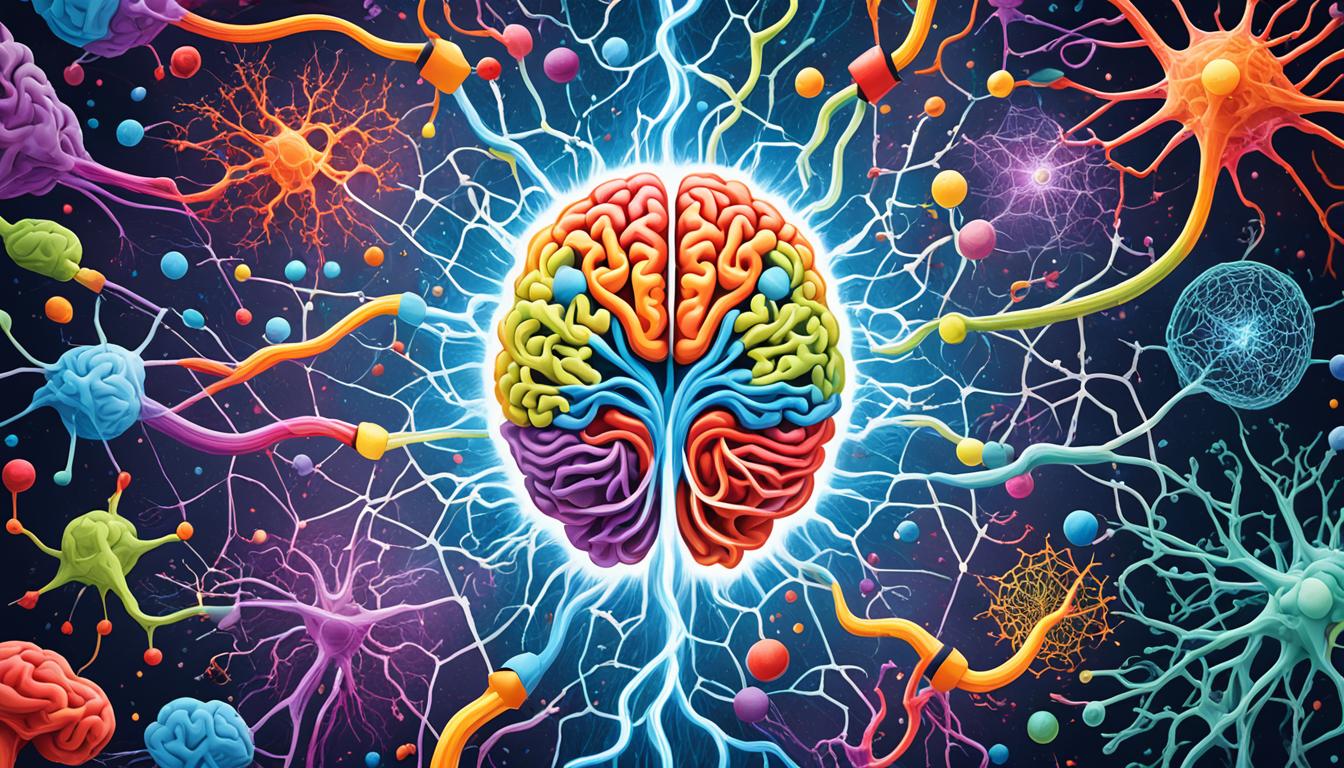
The human brain’s ability to change and adapt is truly amazing. This process, called neuroplasticity, lets our brain change its paths and connections. It’s how we learn, grow, and bounce back from challenges.
Neuroplasticity means the brain can change its structure and function. It can make new connections and change old ones. This helps us learn new things, remember memories, and recover from injuries or disorders.
Learning and remembering things depends on neuroplasticity. When we experience new things, our brain makes new paths to store the info. These paths get stronger over time, making it easier to remember and use what we’ve learned. This flexibility also helps us adapt to new situations, finding new ways to solve problems.
Neuroplasticity keeps going throughout our lives, keeping the brain flexible as we get older. By understanding it, experts can create new treatments for brain injuries or disorders. The brain’s ability to change shows its incredible power and potential.
Fun Facts: Uncovering the Brain’s Quirks
The human brain is a true marvel, full of interesting brain fun facts, brain quirks, and brain curiosities. Exploring this amazing organ reveals surprises that challenge our ideas and broaden our knowledge.
Surprising Revelations About Our Gray Matter
Did you know the human brain can generate enough electricity to power a small light bulb? This shows how much energy it uses, thanks to trillions of neural connections working together.
Another myth to clear up is the idea that we only use 10% of our brain. Actually, scientists say the whole brain is busy with different tasks, working together to do many things.
The brain’s ability to change and adapt is called neuroplasticity. This means it can change its connections to learn new things, adapt to new experiences, or recover from injuries.
As we learn more about the brain, we’re always surprised by its brain curiosities and how it affects our lives. Its complex structure and ability to adapt keep us fascinated and eager to learn more.
The Power of Memory: How the Brain Stores and Retrieves Information
The human brain is amazing at storing and remembering things. It’s a key part of how we learn and remember our lives. By looking into how it works, we can see just how complex it is.
Exploring the Mechanisms Behind Recollection
Creating memories is a complex task that uses many brain areas and chemicals. It starts with turning what we see, hear, and feel into brain signals. These signals then get stored in places like the hippocampus.
Getting memories back is just as complex. It’s like finding and reusing these brain signals. The brain’s ability to change and adapt helps us remember and make new memories. This is called neuroplasticity.
This flexibility is key to how we learn and remember. It shows how important memory and brain flexibility are for our thinking skills.
Scientists are still learning about memory. They study how it forms, stores, and comes back to us. They look at how sleep and emotions affect memory. This research helps us understand the amazing human brain better.
Brain Development: From Infancy to Adulthood
The human brain changes a lot from birth to adulthood. At birth, it starts growing fast, making new connections. This early brain development is key for our thinking, learning, and behavior.
As we get older, our brain growth keeps going. The outer layer, called the cerebral cortex, gets bigger and more complex. The brain maturation process means getting rid of old connections and making new ones faster. This helps our brain work better.
This process of childhood development helps us think better, learn new things, and understand language. It shapes our problem-solving skills and our thinking abilities.
Our brain stays flexible throughout life, a trait called neuroplasticity. This means we can keep learning, making new memories, and adjusting to new things even as adults. Learning about how our brain changes helps us see the amazing journey our minds go through from the start to adulthood.
The Mind-Body Connection: How the Brain Influences Physical Health
The link between the brain and body is often missed, but it’s key to understanding how our mental state affects our physical health. This mind-body connection is vital to explore. It shows how our thoughts, feelings, and brain activities can change our physical health.
Unraveling the Complex Relationship
The brain and body talk to each other, with the brain affecting the body as much as the body affects the brain. This is called the psychosomatic effect. Our mental health can change our physical health. Stress and negative feelings can make our heart race, muscles tense, and weaken our immune system, leading to health problems.
On the other hand, our physical health can also affect our mental state. Long-term pain, illness, or injury can lead to depression and anxiety. This shows why we need to look after both our mental and physical health for a good life.

Learning about the mind-body connection helps us find new ways to get better physically and mentally. Practices like mindfulness, meditation, and managing stress use the brain-body link. They lead to better health and a happier life.
Cognitive Abilities: The Brain’s Impressive Problem-Solving Skills
The human brain is amazing, able to handle complex challenges and make smart decisions. It has skills like problem-solving, critical thinking, and decision-making. These skills help us deal with the world around us. They show how adaptable and strong the brain is.
Problem-solving is at the core of these abilities. It helps us solve work issues, plan game moves, or come up with new ideas. The brain can process info, spot patterns, and think of new solutions. This lets us look at problems from different sides, think about the good and bad, and make smart choices.
Critical thinking is also key for everyday life. It lets us analyze info, make logical conclusions, and check if arguments are true. This skill is crucial in a world full of information. It helps us know what’s real and what’s not.
The brain’s skills don’t just help with solving problems. They also guide our decisions. By looking at different options, thinking about the outcomes, and using our past experiences, we can make choices that change our lives. This shows how adaptable and capable the brain is in facing new challenges.
The Role of Sleep in Brain Function
Sleep is key to our brain’s health and how it works. It helps control sleep cycles and boosts our thinking skills. Let’s dive into how sleep affects our mental health.
Unveiling the Mysteries of Sleep’s Impact
Good sleep is crucial for a healthy brain. During sleep, our brain works hard to keep memories sharp, learn new things, and solve problems. Sleep cycles, including REM and non-REM stages, help our brain heal and refresh.
Not getting enough sleep can hurt our thinking skills. It can make us less focused, slow our thinking, and affect our brain’s health.
Research shows that enough sleep helps us remember things better, think more creatively, and solve problems. But not sleeping well can lead to trouble concentrating, mood changes, and poor decisions. Knowing how sleep affects our brain helps us improve our sleep habits for a sharper mind.
Brain Disorders: Understanding and Overcoming Challenges
The human brain is incredibly complex and faces many disorders and challenges. These include a variety of neurological conditions, mental health issues, and cognitive impairments. These can greatly affect someone’s life quality. It’s important to understand these disorders to find effective treatments and support.
Alzheimer’s disease is a common brain disorder that slowly destroys memory and thinking skills. It’s one of many conditions that challenge the brain. Others include Parkinson’s disease, stroke, and traumatic brain injuries, each with its own set of challenges.

Dealing with brain disorders needs a comprehensive approach. This includes advances in medical research, better diagnostic tools, and new treatments. Researchers and healthcare workers are always trying to find the causes of these disorders. This helps in early detection and tailored treatments.
Even with the challenges, there is hope. As we learn more and make scientific progress, people with brain disorders can better manage their conditions. Together, we can help unlock the brain’s full potential and look forward to a brighter future.
The Future of Neuroscience: Exciting Frontiers and Discoveries
Our understanding of the brain is growing fast, and the future of neuroscience is bright. New technologies in brain imaging and neural interfaces are leading to big discoveries. These could change how we study and treat the brain.
Technologies like brain-computer interfaces and neurotech are opening new doors. They let us understand and interact with the brain in new ways.
Neuroscience is set to make big leaps in the next few years. Researchers are looking into how the brain changes and adapts. This could lead to better treatments for brain diseases.
Also, artificial intelligence and machine learning are becoming key in neuroscience. They help us analyze data and make predictions. This improves our understanding of how the brain works.
The future also holds hope for treating brain disorders. We’re seeing progress in early detection and personalized treatments. This could help people with Alzheimer’s, Parkinson’s, and brain injuries.
As we learn more about the brain, the chances to improve life and knowledge are thrilling. The possibilities are endless, and the future looks bright for neuroscience.