Superstitions are quirky beliefs that fascinate people all over the world. They give us a peek into the rich world of human culture. From old rituals to today’s traditions, these superstitions show the unique stories, values, and views of different societies. In this article, we’ll explore the origins, meanings, and effects of these strange yet interesting superstitions around the globe.
Superstitions are more than just silly beliefs. They often show deep cultural and psychological insights. By learning about these superstitions, we can appreciate the wide range of human beliefs and experiences. Lucky numbers and ancient rituals are just a few examples that reveal the amazing variety of human thought and tradition.
Whether you doubt or believe in superstitions, this journey through them will be both fun and enlightening. So, let’s start and find out the amazing stories behind the world’s most unusual superstitions.
The Origins of Superstitions: Where It All Began
Superstitions have been a big part of human culture for centuries. They come from the beliefs, rituals, and traditions of ancient civilizations. From ancient Greece’s folklore to indigenous myths, these beliefs go back to the start of human history.
Many superstitions started in religious beliefs and practices. People tried to understand the world by creating rituals and traditions. These practices turned into the folklore and myths we know today.
“Superstitions are the shadows of true beliefs.” – Sophocles
As ancient societies grew, their beliefs and traditions spread through trade and migration. This mixing of myths and rituals created a rich world of superstitions. These stories still fascinate people all over the world.
Superstitions show how deeply connected they are to our human nature. They help us deal with fear and the unknown. By studying these beliefs and rituals, we learn more about ourselves and our shared history.
Common Superstitions in America
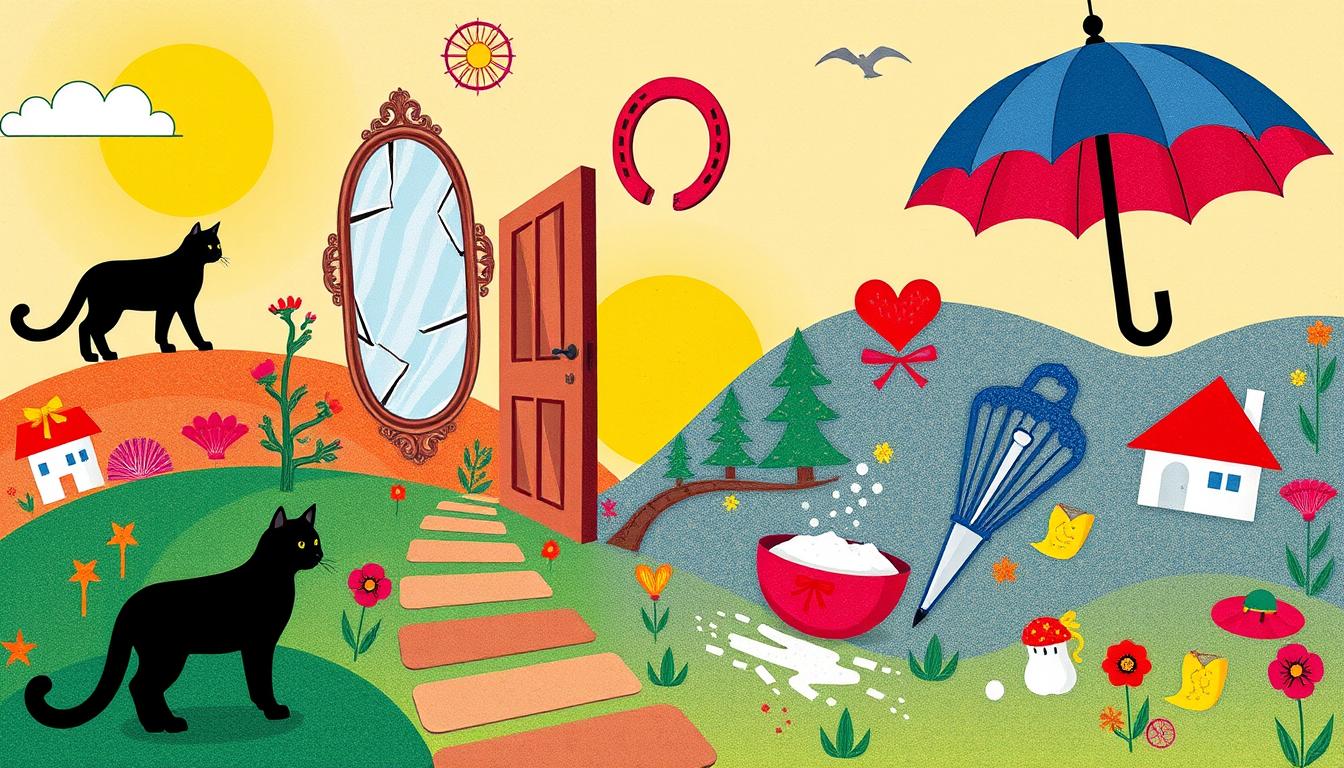
American culture is filled with superstitions passed down through generations. These beliefs are part of our daily lives. For example, breaking a mirror is believed to bring seven years of bad luck. Friday the 13th is also feared by many.
The horseshoe is a well-known luck symbol in the United States. Hanging a horseshoe above your doorway is thought to bring good luck. This tradition comes from ancient pagan beliefs, where horseshoes were seen as symbols of protection and prosperity.
Friday the 13th is feared by many in America. Some people avoid important events or decisions on this day. The exact reason for this fear is unclear, but it may relate to biblical and cultural views on the number 13 and Friday being unlucky.
“Superstitions are the unscientific beliefs that certain actions or events will bring good or bad luck. They often persist despite lack of evidence to support them.”
Superstitions like avoiding black cats, knocking on wood, or tossing a coin into a fountain are common in America. These beliefs show our desire to control and find meaning in an uncertain world.

European Superstitions and Their Meanings
The European continent is full of rich cultural traditions. It’s filled with superstitions, omens, and rituals. From black cats in Britain to knocking on wood in Germany, these beliefs have amazed people for centuries. They show the diverse folklore of the region.
Black cats are a well-known European superstition. In many places, they’re seen as bad luck. But, in some areas, they’re believed to protect against evil spirits.
Knocking on wood is another common superstition. It comes from the idea that wood has spiritual power. People knock on wood to avoid bad luck or to protect themselves from harm.
“Superstitions are a part of our cultural heritage, a testament to the human desire to find meaning and security in an uncertain world.”
The evil eye is a widespread superstition in Europe. It’s believed to bring bad luck with a single glance. To fight this, people use symbols like the cornicello from Italy and the nazar from Turkey. These symbols are thought to keep the evil eye away, protecting the wearer or their home.
These superstitions and rituals give us a peek into European folklore. They show the continent’s rich cultural heritage and our need to understand the unknown. By exploring these beliefs, we learn more about how superstitions have shaped European history.
Unique Superstitions from Asia
Superstitions are found all over the world, but Asia has its own special ones. From Japan’s Omamori talismans to the bad luck of the number four in East Asia, these superstitions show the rich traditions of the region.
In Japan, Omamori charms are believed to bring luck and protection. These small talismans are sold at Shinto shrines and temples. Many people carry them for good luck in school, travel, and more.

The number four is also unlucky in many East Asian cultures. This is because the word for “four” sounds like “death” in some languages. So, people avoid using the number four in building numbers and phone numbers.
In some Asian countries, people have rituals to keep lightning away. In Southeast Asia, for example, they perform ceremonies or hang metal rods or mirrors. These actions are to protect their homes and families from lightning.
“The diversity of Asian superstitions showcases the depth and richness of cultural traditions that shape the daily lives of people across the region.”
From Japan’s Omamori charms to avoiding the number four and lightning rituals, Asia’s superstitions are fascinating. These traditions have been around for centuries and still influence people’s lives today. They show how superstitions can deeply affect how we see the world.
Latin American Superstitions: Colorful Beliefs
The vibrant tapestry of Latin American culture is filled with superstitions and beliefs. These have lasted through time. They come from the indigenous roots and the influence of Spanish and Portuguese colonization. These superstitions show the region’s diverse heritage and its people’s deep connection to the spiritual world.
One famous superstition is that spilling salt brings bad luck. This belief comes from the importance of salt in ancient Mesoamerican civilizations. Salt was a precious commodity. Spilling it was seen as a bad omen, a belief that still exists today.
“In Latin American culture, the color red holds a special significance, representing love, passion, and protection against evil.”
The color red is also very significant in Latin American culture. It stands for love, passion, and protection against evil. This belief is seen in the use of red accessories, like ribbons or charms. They are used to ward off negative energies and attract positive ones.
These superstitions and beliefs shape the daily lives of Latin Americans. They also play a big role in cultural events and celebrations. From the vibrant red accents in weddings to the omens linked to certain actions, these traditions are a big part of the Latin American experience. They mix the spiritual and the mundane in a captivating way, showing the cultural identity of the region.
African Superstitions: Rich in Tradition
Africa is a land of rich superstitions, rituals, and traditions. These beliefs are woven into the cultural fabric of the continent. They range from ancient folklore to modern practices, influencing many Africans’ lives and views.
At the heart of African superstitions is the respect for ancestral spirits. Many believe these spirits can impact the living, for good or bad. To keep them happy, communities perform elaborate rituals and make offerings.
“The ancestors are always with us, watching over our lives and guiding our steps. To ignore their presence would be to invite misfortune and misery.”
Divination is another key part of African superstitions. People seek guidance from spiritual leaders or objects to uncover truths and predict the future. These rituals, rooted in African folklore, help connect with unseen forces that shape life.

African superstitions help ward off evil and ensure good harvests. They are a vibrant part of the continent’s cultures and traditions. As the world gets smaller, these beliefs remind us of the lasting power of cultural heritage and the mysteries that fascinate us.
Superstitions in Oceania: Unique Insights
Oceania’s islands are home to a rich mix of superstitions and beliefs. These traditions are woven into the culture, from dream interpretations to honoring nature. They give us a peek into the spiritual history of the area.
Dreams are very important in many Oceanian cultures. Elders who understand dreams help people make sense of them. They believe dreams connect us to the spiritual world, offering advice and warnings.
The natural world is also deeply valued in Oceanian folklore and beliefs. The sun, moon, and stars are seen as gods. Rivers, mountains, and forests are filled with sacred energy. Superstitions about protecting these elements show how connected we are to nature.
Animals also hold special meaning in Oceanian traditions. Some animals carry the spirits of ancestors or signal good or bad luck. Seeing certain animals, like owls or black cats, can lead to rituals or caution.
“In Oceania, the natural world is not merely a backdrop, but a living, breathing entity that shapes the very fabric of spiritual beliefs and daily life.”
These superstitions and beliefs reveal the depth and variety of Oceanian folklore. Learning about these traditions helps us appreciate the rich culture of this fascinating region.
The Role of Superstitions in Modern Society
In today’s world, you might think superstitions are old news. But they still play a big role in our lives. They adapt and stick around in surprising ways.
Superstitions are big in sports and media too. Athletes have special pre-game rituals they believe in. They think these rituals can change the game’s outcome. It shows our deep need to control the unknown.

Superstitions also shape our modern traditions and pop culture. Movies, TV, and books often use them in stories. This shows how much we still value these old beliefs.
Even kids learn superstitions from family and friends. These beliefs shape how they see the world. They can affect their choices and actions as adults.
As we face today’s challenges, it’s clear that superstitions, beliefs, and rituals still captivate us. They show the power of our imagination and our quest for meaning. They help us make sense of the world, even when it’s not clear.
Debunking Common Superstitions: Myth vs. Reality
Superstitions have been a big part of our culture for a long time. They’ve been passed down through generations and are deeply rooted in our beliefs and traditions. But, as we learn more about the world, many of these superstitions have been proven wrong by science. Let’s look at how myths differ from reality in some common superstitions.
The idea that black cats bring bad luck is a common superstition. But, it’s not based on science. The color of a cat’s fur doesn’t make it lucky or unlucky. This belief likely comes from the old days when black cats were linked to witchcraft and the unknown.
“Superstitions are the shadows of true beliefs.” – Voltaire
Another superstition is the fear of breaking a mirror, which is thought to bring seven years of bad luck. This belief comes from ancient Romans who thought the soul was reflected in mirrors. They believed breaking a mirror would shatter the soul. But, science today shows mirrors just reflect light, and breaking them doesn’t have supernatural effects.
It’s not about saying these superstitions are wrong. It’s about understanding the difference between what we believe and what’s real. Science helps us understand where these superstitions come from and why they exist.
Future of Superstitions: Evolution and Change
The world is getting more connected through technology and globalization. This change will deeply affect superstitions. While some old beliefs might disappear, others will evolve to fit the new cultural scene.
Science and easy access to information have questioned many superstitions. Yet, this has also made us value these beliefs more. Experts believe superstitions help keep our cultural heritage alive. They connect us to our past and share our experiences.
Sharing ideas and beliefs across borders has also created new superstitions. As cultures mix, their traditions blend. This mix could lead to a vibrant mix of beliefs, where different superstitions shape our view of the supernatural.