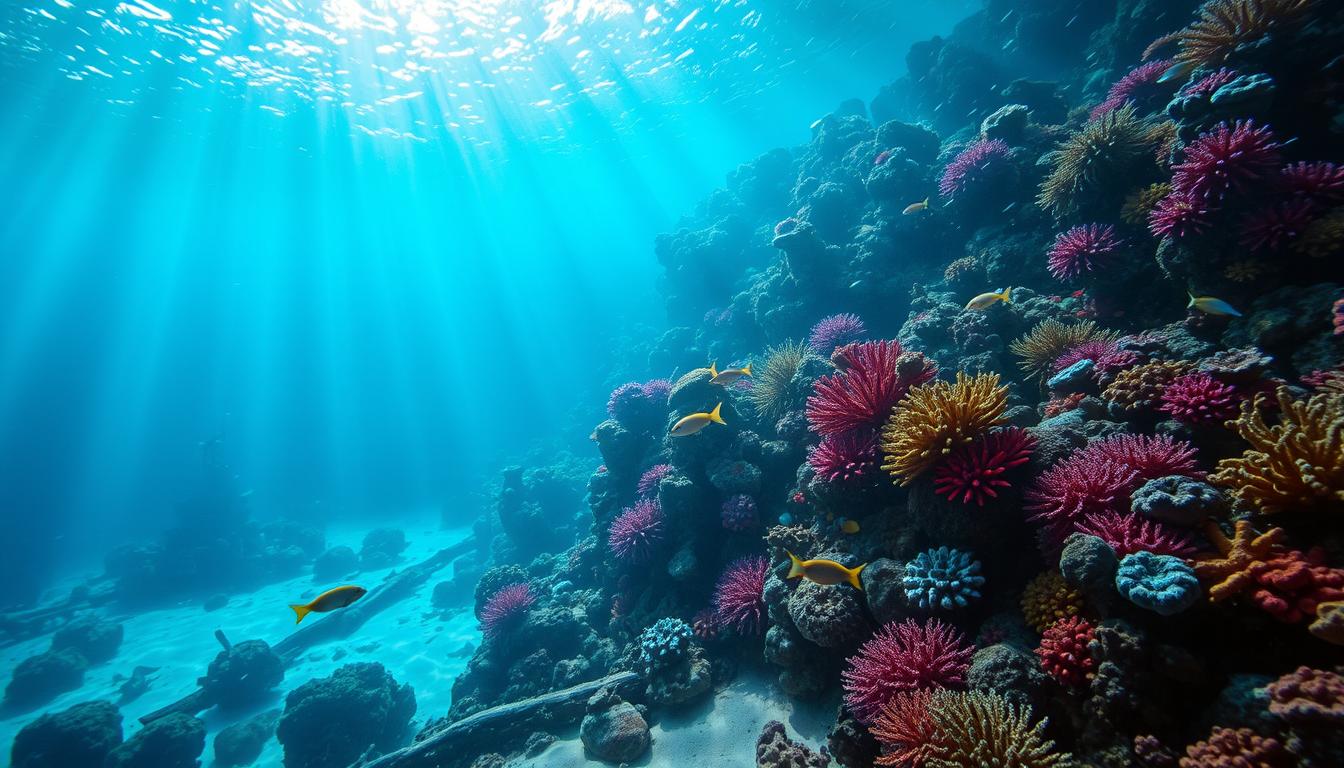
The ocean is vast and full of mysteries. It covers over 139 million square miles. It’s home to strange creatures and unexplained events.
Marine exploration is uncovering more about the ocean. It’s a journey to find secrets that have been hidden for a long time.
The ocean is full of wonders that are hard to understand. It has glowing plankton and giant squid. Researchers use new technology to learn more about these mysteries.
They find new species and explore old shipwrecks. The ocean’s secrets keep us all curious.
The ocean is full of life and natural wonders. It has coral reefs and deep trenches. Exploring the ocean helps us understand our planet better.
Let’s go on a journey to discover the ocean’s secrets. We’ll uncover the hidden wonders that lie beneath the waves.
The Enigmatic Depths of the Ocean
The ocean’s depths are still a mystery to us. As we dive into the abyssal zones, the size of this underwater world is overwhelming. Depths over 10,000 meters pose a huge challenge, even for the toughest submersibles.
Exploring these depths is filled with obstacles. The water’s weight is crushing, and there’s no sunlight. Yet, creatures have adapted to live here, using light and clever hunting tactics. Despite our progress, much of the ocean floor is still a mystery, full of secrets waiting to be found.
“We have actually mapped more of the surface of the Moon and Mars than we have of the ocean floor.”
– Robert Ballard, oceanographer and deep-sea explorer
Our quest to understand the ocean’s depths is ongoing. The allure of the unknown drives us deeper into the ocean. Here, Deep Sea Discoveries and Underwater Anomalies hold the secrets of this vast and fascinating world.

Strange Creatures of the Deep
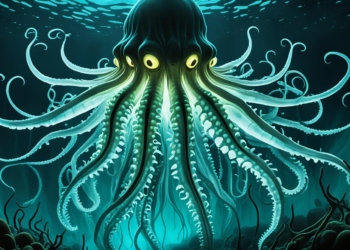
Dive into the world of Cryptozoology, where the deep sea’s mysteries come alive. Under the waves, a world of glowing wonders awaits. Here, creatures like the giant squid and anglerfish hide secrets that fascinate scientists and fans.
Bioluminescence, or the ability to light up, is key for many deep-sea beings. This light helps them attract prey, scare off predators, or talk to each other. Discover how these creatures light up the dark ocean, revealing the complex life beneath the waves.
“The deep sea is the last frontier on this planet, with more than 80% of the oceans yet to be explored. Who knows what other strange and wondrous creatures await discovery?”
The giant squid, once thought mythical, has been the focus of many searches. New tech has given us a peek at these giants, showing their size and habits. As we explore the deep, Cryptozoology’s secrets keep us excited and curious.

The deep sea is full of untold tales, ready to be found. Come with us as we uncover the strange and amazing sea creatures. Here, the unknown meets the known, and our imaginations soar.
Underwater Ecosystems: Nature’s Wonders
Beneath the ocean’s surface lies a world full of intricate ecosystems. These underwater habitats are teeming with diverse marine life. From vibrant coral reefs to lush seagrass beds, they are true marvels of the Ocean Mysteries.
Coral reefs are known as the “rainforests of the sea.” They are home to a vast array of marine species. This includes vibrant fish, intricate invertebrates, and even sea turtles. Coral reefs are crucial for the ocean’s balance, serving as a food source and shelter for many creatures.
“The ocean is a mighty harmonist.” – William Wordsworth
Mangrove forests along coastlines are also vital. These resilient plants provide a safe haven for many species. They also protect shorelines from waves and storms. Seagrass beds, meanwhile, are nurseries for young fish and support a wide range of marine life.

These underwater ecosystems are nature’s wonders. They show the incredible adaptability and resilience of the marine world. As we explore the oceans, we find the extraordinary beauty and complexity of these habitats. They inspire awe and wonder in all who see them.
The Role of Ocean Currents
The oceans are always moving, thanks to ocean currents. These currents are key to the Unexplained Phenomena and Underwater Anomalies in marine life around the world.
Ocean currents move nutrients, heat, and marine life over long distances. Big currents like the Gulf Stream and the Kuroshio Current are driven by wind, water density, and Earth’s rotation. They affect where and how many marine species live, from tiny plankton to huge whales.
“The ocean is a world of its own, with its own weather, its own laws, and its own weird creatures.” – Robert Ballard, ocean explorer
Ocean currents do more than just move life around. They also help control Earth’s climate. They carry heat from the equator to the poles, keeping temperatures steady. They also bring up nutrients that make ocean basins productive.
Learning about ocean currents is crucial for understanding the sea. It helps us track migratory species and predict climate change effects. Studying these currents is key to solving the mysteries of the Unexplained Phenomena and Underwater Anomalies under the sea.

The Impact of Climate Change on Oceans
The oceans are facing severe damage from climate change. Rising sea temperatures and ocean acidification are major threats. These changes are disrupting the balance of marine life.
The Ocean Mysteries we’ve always dreamed of are now in danger. Deep Sea Discoveries show us the harsh truth of climate change. Coral reefs, once full of life, are now bleaching and losing their color.
“The ocean is the heart of our planet, and if the heart stops, the rest of the planet cannot survive.” – Sylvia Earle, renowned oceanographer and marine biologist
Climate change’s effects on oceans go beyond losing beautiful habitats. It’s changing ocean currents and weather patterns. This is messing up the food webs that many species depend on.
The future of our oceans is uncertain. Our choices today will decide the fate of the Deep Sea Discoveries. We must act now to protect our marine ecosystems and the Ocean Mysteries that keep our planet alive.
Fascinating Adaptations in Ocean Life
The ocean’s depths hide a world of amazing creatures. From those that blend into their surroundings to those that light up the darkness, the sea is full of incredible adaptations. These traits help many species survive and thrive in their underwater homes.
Cryptozoology, the study of hidden animals, is fascinated by how sea creatures hide. Fish like the cuttlefish can change color and pattern quickly. This helps them avoid predators. On the other hand, creatures like the lanternfish use light to communicate and attract mates.
“The ocean is full of mysteries, and the more we explore, the more we realize how little we truly know about the wonders that lie beneath the waves.”
How ocean creatures eat is also full of amazing adaptations. Baleen whales have special filters to catch lots of tiny food. This helps them feed their huge bodies. In the deep sea, some predators can swallow prey that’s much bigger than they are. This way, they make the most of every chance to eat.
The ocean’s ecosystem is always surprising us with new discoveries. These findings help us understand how marine life adapts to its changing world. It’s a never-ending journey of wonder and learning.
The Mystery of Deep-Sea Exploration
The ocean’s depths have always fascinated us. Marine exploration, a field studying the deep sea, has made big progress. Thanks to new tech, like ROVs and AUVs, we can now explore the ocean’s secrets.
New species have been found in the deep sea. Deep Sea Discoveries have shown us creatures like glowing fish and strange crustaceans. These discoveries help us understand life in the deep ocean and how creatures adapt to it.
“The deep sea is the last great frontier on our planet, a place of mystery, wonder, and amazement.”
Even with new tech, the deep sea still has secrets. The extreme conditions make it hard for researchers. But they keep finding new ways to explore and learn.
The deep sea’s mystery excites scientists and the public. Every new find and tech breakthrough helps us understand the ocean better. This opens up a world of discovery in marine exploration and deep sea discoveries.
Marine Conservation Efforts
The need for strong conservation efforts in our oceans is more urgent than ever. Scientists, policymakers, and environmentalists worldwide are working hard. They aim to protect our oceans and the life they support.
Creating protected marine areas is a key strategy. These areas, covering both coastlines and vast ocean spaces, are safe havens for endangered species. They help preserve fragile ecosystems. By limiting human activities, we can reduce threats like overfishing and pollution.
Combating climate change’s impact on our oceans is also crucial. Rising sea temperatures and ocean acidification harm marine life. Efforts to cut greenhouse gas emissions and protect habitats like coral reefs are vital. They help preserve our oceans’ wonders for the future.
“The health of our oceans is intrinsically linked to the well-being of our planet. By investing in marine conservation today, we’re not just protecting the wonders of the deep – we’re securing the future of our shared blue planet.”
Together, we’re making progress in preserving our oceans. This includes scientific research, policy changes, and raising public awareness. The journey ahead is tough, but with commitment and sustainability, we can protect our marine ecosystems.
The Future of Our Oceans
Looking ahead, the ocean’s secrets still excite us. New tech lets us dive deeper than ever before. We’re using advanced underwater vehicles and new ways to explore the sea.
But, our oceans face big problems. Sea levels are rising, and pollution is harming marine life. We need everyone’s help to keep our oceans healthy.
Stories of old sea cultures still thrill us today. Now, we can learn even more about the ocean. By loving the ocean, we can teach others to protect it for the future.