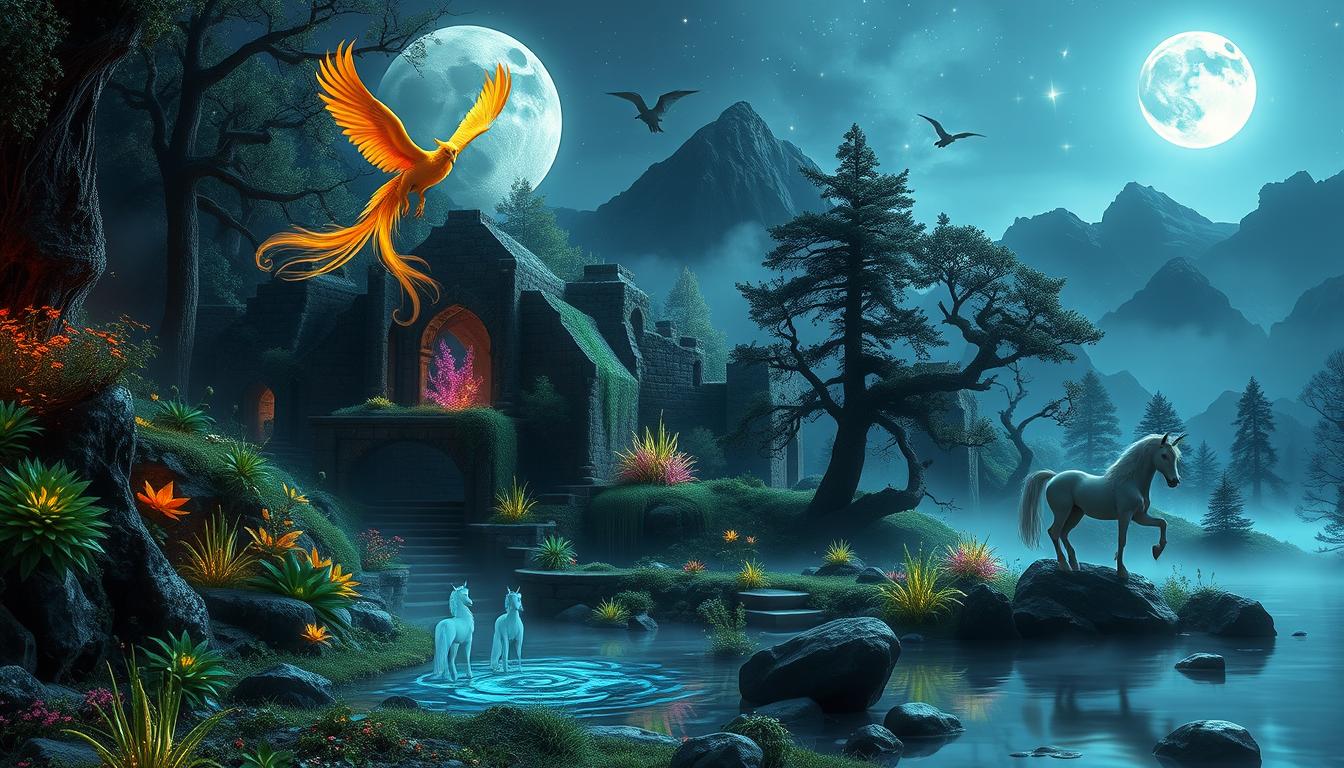
Dive into the world of mythology legends and ancient folklore. Here, reality and imagination mix, revealing amazing tales. These Mythology Legends have crossed time and cultures, leaving a lasting impact on our world.
Learn about the origins of these Ancient Stories. They show us the beliefs, values, and dreams of past societies. Discover the hidden meanings and symbols in these tales. See how they still influence art, literature, and our own Mythology Legends.
Whether you’re a fan or just curious, join us on a journey through mythology and folklore. Here, the past and present meet, making the extraordinary seem ordinary. Get ready to be amazed by the Surprising Stories Behind Myths and Folklore.
The Origins of Mythology Legends
Mythology and folklore go back to the beginning of human history. These Oral Traditions and Cultural Narratives helped our ancestors understand the world. They passed down Ancient Stories that shaped their beliefs and views.
Storytelling is at the core of mythology. It’s a skill humans have used for thousands of years. These stories came from the collective imagination of a people. They show their unique views, traditions, and beliefs.
“Myths are the foundation of life; they are the timeless patterns, the schematic structure of life, the public dreams by which societies live. Myths are the stories we live by.”
– Joseph Campbell, renowned American mythologist and comparative religion scholar
The roots of mythology are in indigenous cultures. In those times, stories were passed down through words. Before writing, Oral Traditions were key for sharing knowledge and stories.
With the rise of writing, Cultural Narratives were written down. This saved Ancient Stories for future generations. Mythology’s lasting impact is in its ability to connect us to our past and shape our views of the world.
Famous Mythological Figures You Should Know
Mythology is full of legendary heroes and creatures that have lasted for ages. These Legendary Heroes and Mythological Creatures still fascinate us today. They shape our view of Heroic Tales that have been told for generations.
In Greek mythology, Hercules is a standout. He’s the son of Zeus and has incredible strength. He completed many brave tasks that showed his courage and willpower. Odysseus is also famous for his cleverness and bravery during his journey back from the Trojan War, as told in Homer’s “Odyssey.”
“The stories of these mythological figures have a way of transcending time and cultures, reminding us of the timeless human values of courage, resilience, and the pursuit of greatness.”
There are many Mythological Creatures from different cultures that are just as captivating. The phoenix, known for its rebirth, comes from ancient Egyptian and Chinese myths. Coyote, a trickster figure, is a favorite in Native American folklore.

Exploring mythology, we find a wealth of Heroic Tales. These stories reveal the human experience, touching on bravery, sacrifice, and wisdom. Learning about these iconic figures helps us appreciate the power of storytelling and the truths that connect us all.
The Purpose of Myths in Society
Myths and folklore have shaped our view of the world for ages. They bring us Symbolic Meanings and Cultural Narratives that entertain and teach us. By exploring myths, we discover the heart of human experience and our shared truths.
Myths help us understand the world and our role in it. They explain natural wonders that were once mysteries. Myths help us grasp the universe’s complexity, from seasons to stars.
“Myths are the expressions of the deepest longings of the human spirit.” – Joseph Campbell
Myths do more than explain science and nature. They teach us moral lessons and shape our values. Stories of heroes and creatures teach us about courage, compassion, and perseverance. These values have helped build our civilization.
Exploring myths and folklore deepens our appreciation for Symbolic Meanings and Cultural Narratives. This knowledge enriches our lives and helps build stronger communities. It fosters a more harmonious society.
The Intersection of Myth and Religion
For centuries, ancient stories and religion have been closely linked. Myths, filled with cultural narratives and symbolic meanings, have greatly influenced religious beliefs. This blend of mythology and religion is truly captivating.
Many mythological figures are key in different religions. These include the gods of Greek and Roman myths and the spiritual beings of Eastern philosophies. These ancient stories have enriched religious teachings and rituals for ages.
“Myths are public dreams, and dreams are private myths.”
― Joseph Campbell
Mythological elements in religious stories add a timeless and universal feel. They connect people to their shared human experiences and collective consciousness. This way, religions tap into the deeper aspects of human nature.
The connection between myth and religion shows our deep need to understand the world. It’s about finding meaning in life’s mysteries and seeking comfort in ancient stories. By diving into this connection, we appreciate the cultural narratives and symbolic meanings that have shaped us.
Uncovering Lesser-Known Mythology Legends
Mythology is filled with stories from many cultures. Famous figures like Zeus and Thor are well-known. But, there are many lesser-known legends that are just as interesting.
These hidden stories give us a peek into the traditions of different societies. They show us the rich world of Mythological Creatures and cultural tales from around the globe.
The Japanese _Kappa_ is a fascinating creature. It has a bowl-shaped head that holds water, its power source. Kappas love to play tricks but are also polite and mysterious.
The _Rougarou_ is another captivating tale. It comes from Cajun Folklore in Louisiana. This creature is a mix of French, Native American, and Catholic traditions.
“The Rougarou is a terrifying, yet captivating, figure that has haunted the imaginations of Cajuns for generations.”
Exploring these lesser-known legends helps us appreciate the diversity of Mythological Creatures. These stories entertain and give us a glimpse into the beliefs and values of different cultures.
How Myths Influence Contemporary Culture
The stories of Mythology Legends have moved beyond their ancient roots. They now shape our modern culture. These Cultural Narratives and Heroic Tales spark creativity in artists, writers, and filmmakers.
Mythology’s impact is seen in movies and books. Films like “Wonder Woman” and “Thor” bring ancient legends to life. Authors like Rick Riordan introduce new fans to Greek, Roman, and Egyptian myths through young adult series.

Artists find endless inspiration in Mythology Legends. They use these Cultural Narratives to explore human experiences and universal truths. This is seen in paintings, sculptures, music, and dance.
“Mythology is the cornerstone of literature, and it is necessary for understanding the human experience.”
Mythology’s influence remains strong in our culture today. These Cultural Narratives and Heroic Tales continue to captivate and enlighten us. They remind us of the enduring truths that have shaped human history.
The Evolution of Myths Over Time
Myths have been fascinating humans for centuries. They are not fixed but change with history and culture. Exploring Myth Interpretation shows how these stories evolve, mirroring the values of different societies.
The Cultural Narratives that shape myths are always changing. What was once seen as truth is now seen as a symbol of deeper themes. Myths connect people across time and space, touching hearts in every era.
“Myths are the collective dreams of humanity, reflecting our shared hopes, fears, and experiences. As our world changes, so too do the Ancient Stories we use to make sense of it.”
The evolution of myths is an active process. It’s a mix of past and present, influenced by history, technology, and society. Through Myth Interpretation, we understand humanity better and how our stories evolve.
Exploring Myth Interpretation reveals the strength and flexibility of ancient tales. From Greek myths to indigenous legends, myths show the power of storytelling and our shared human journey.
Myths and the Human Experience
Myths and folklore are more than old stories. They show us the common human experiences. They help us understand the Symbolic Meanings and Cultural Narratives that connect us all.
At the core of many myths are archetypes. These are symbols or patterns found across cultures and time. Archetypes like the hero, the mother, and the trickster show us our deepest fears and desires.
“Myths are the creative representation of the recurrent patterns of the human psyche.”
Through Myth Interpretation, we learn about our shared experiences. Myths deal with love, loss, identity, and the search for meaning. They reflect the challenges we all face.

Myths are not just stories. They help us understand the world and our place in it. They give us a deeper look into the human condition. This helps us appreciate the Cultural Narratives that have lasted through history.
Local Legends and Their Significance
Folklore, Cultural Narratives, and Oral Traditions are key to keeping communities’ unique identities alive. Local legends, shared for generations, give us a peek into the rich world of regional beliefs and customs. These stories carry cultural knowledge and values from one generation to the next.
The Loch Ness Monster is a great example. This legendary creature has fascinated millions. It comes from the Scottish Highlands and symbolizes the area’s mystic and mysterious side. The monster’s elusive nature and lasting fame show the strong bond between a community and its stories.
“Legends are not simply stories – they are the living embodiment of a culture’s Folklore and identity.”
In Australia, the Dreamtime Narratives are very important. These ancient stories tell how the world was made and how everything is connected. They link communities to their past and offer spiritual guidance. Keeping these stories alive helps Indigenous Australians hold onto their heritage and connect with their land.
Local legends capture the essence of a place. These stories, passed down through time, show human resilience and creativity. By looking into these Cultural Narratives, we learn about the rich variety of human experiences and the lasting impact of Oral Traditions on our shared heritage.
Analyzing Mythology Through a Psychological Lens
Mythology has always fascinated us, giving us a peek into our collective psyche. It shows us the symbolic meanings that shape our stories. By looking at myths through a psychological lens, we uncover universal archetypes and shared experiences.
Carl Jung believed myths and symbols come from our collective unconscious. This is a shared pool of images and themes that go beyond personal experiences. Jung thought certain patterns, like the hero and the mother, are part of our psyche and appear in many cultures.
“Myths are public dreams, and dreams are private myths.” – Joseph Campbell
Exploring the symbols in myths helps us understand our shared psychological and emotional experiences. Myth Interpretation lets us see the human psyche, the Symbolic Meanings that shape our views, and the Cultural Narratives that define us.

Myths tell us about the hero’s journey, the wisdom of the wise old man, and the chaos of the trickster. They offer a powerful way to explore universal human themes. By diving into the psychological roots of these stories, we appreciate the depth and complexity of human life.
Resources for Exploring Mythology Legends Further
Mythology and ancient stories have fascinated people for centuries. They give us deep insights into our cultures and what it means to be human. If you want to explore Mythology Legends more, there are many resources to help you.
Books like “Mythology” by Edith Hamilton and “The Hero with a Thousand Faces” by Joseph Campbell are great. They offer a deep dive into myths from around the world. You can also watch documentaries like “Clash of the Gods” on the History Channel. Online sites like Mythology.com and Ancient History Encyclopedia have lots of info too.
These resources are perfect for both new and experienced fans of Mythology Legends. They open the door to understanding the stories that have shaped our world. Start your journey of discovery and find the wisdom and insights in these ancient tales.