
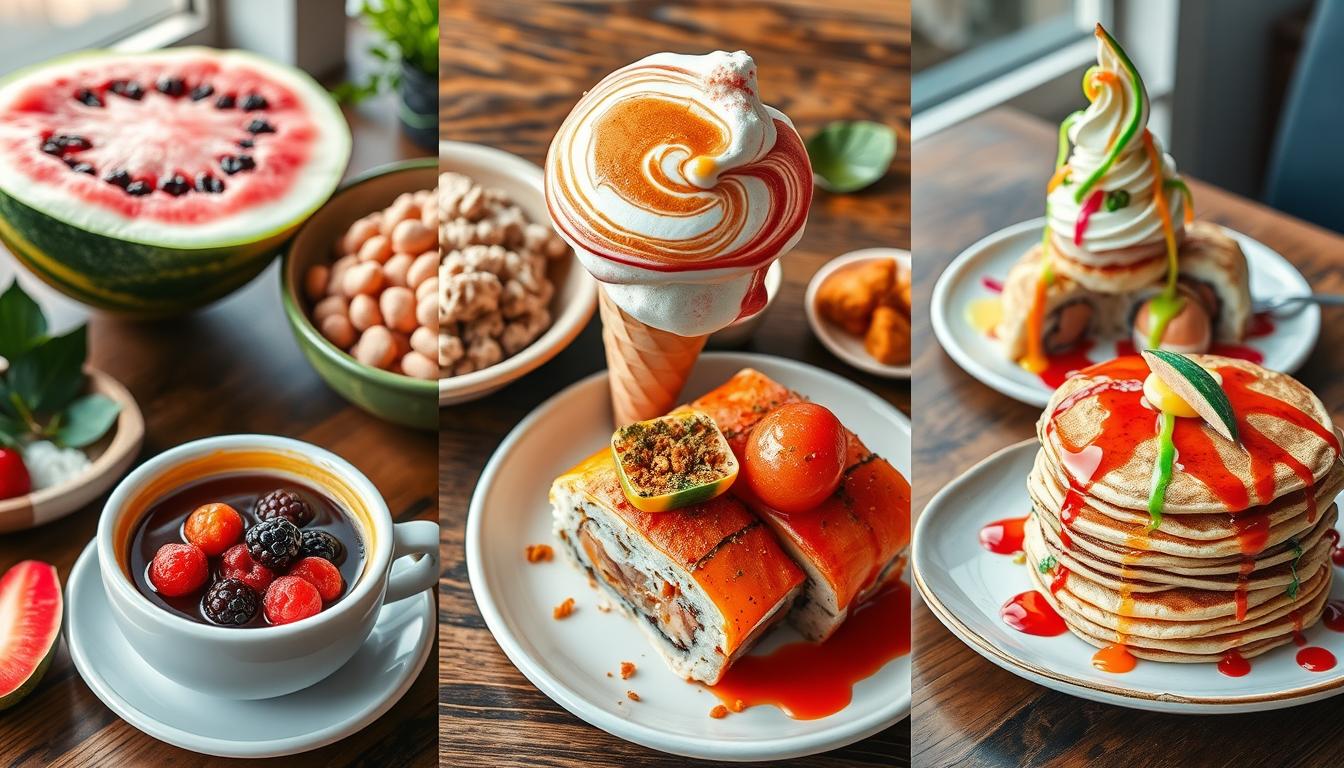
The world of food and drinks is full of interesting facts. We’ll look at the surprising origins of common ingredients. We’ll also debunk health myths and share new food science insights.
Get ready to have your knowledge of food and drinks changed. We’ll explore Food Facts, Nutrition Information, and Culinary Trivia that will make you see your favorite dishes and drinks in a new light.
This journey will reveal the unexpected sources of familiar flavors. It will also show the hidden benefits in everyday ingredients. Whether you love food or just want to make better choices, this article will amaze and educate you.
The Origins of Common Ingredients
Exploring the world of food origins, we find the amazing stories behind our favorite ingredients. These stories take us from ancient spice routes to today’s global markets. They show how geography, culture, and human creativity have shaped our foods.
The tomato, a key ingredient in many dishes, has a surprising history. It comes from the Andes in South America, not Italy. Knowing this, we see how food connects us to different cultures.
The potato, a food staple for many, also has an interesting past. It was first grown in the Andes and later introduced to Europe in the 16th century. Its journey shows how Food Origins influence our cooking traditions.
“The story of food is the story of the world.”
Cinnamon, nutmeg, and coffee have unique stories too. Their flavors were shaped by trade, exploration, and sharing recipes across the world. Learning about these foods enriches our understanding of global cuisine.
By learning about the Ingredient Knowledge of our foods, we connect more deeply with the world. We see the rich history, culture, and geography that have shaped our tastes.
Health Myths vs. Facts
In the world of Nutrition Information, it’s hard to tell fact from fiction. Nutrition science keeps changing, and new Food Science research often goes against old beliefs. Let’s look at some common nutrition myths and find out what’s true.
Many think fat is bad, so they avoid foods like avocados, nuts, and fatty fish. But, recent studies show healthy fats are key for brain function, hormone balance, and heart health. The real problem is often processed foods and added sugars, which can lead to obesity and type 2 diabetes.

Another myth is that carbs are bad. But, complex carbs in whole grains, fruits, and veggies are crucial for energy and gut health. The issue is with refined, low-fiber carbs like white bread and pastries, which can raise blood sugar and cause inflammation.
“The relationship between diet, health, and disease is complex. What we once believed to be true about nutrition may not always hold up to the latest scientific scrutiny.”
As we move through the changing world of Nutrition Information, staying informed is key. By understanding Food Science, we can make better choices for our diet and health.
Superfoods You Should Know About
In the world of Nutrition Information and Dietary Trends, “superfood” is a big deal. But what makes a food super, and which ones should you eat every day? Let’s look at the top 5 superfoods that can improve your health and happiness.
The blueberry is a great start. These tiny berries are full of antioxidants, fiber, and vitamins. They help your brain, reduce inflammation, and boost your immune system. Add blueberries to your breakfast, snacks, or baked goods for a tasty and healthy choice.
“Blueberries are one of the most powerful antioxidant foods on the planet.”
The avocado is another superfood to watch. Avocados are known for their healthy fats, fiber, and vitamins. Eating avocados can help your heart, digestion, and even weight.
Quinoa, the ancient grain, is also a superfood. It’s gluten-free, full of protein, and has complex carbs, fiber, and minerals. Try quinoa instead of regular grains for its nutritional and tasty benefits.
Exploring Nutrition Information and Dietary Trends means being open to new foods. Adding these superfoods to your diet can help you live healthier and feel more vibrant.
The Science Behind Taste
Exploring Food Science and Flavor Profiles, we uncover the secrets of taste. Taste perception involves biology, psychology, and environment. These factors shape our cravings and food choices.
Smell plays a key role in taste. Our olfactory system works closely with taste to shape flavor perception. A dish’s aroma not only makes us hungry but also enhances our taste experience. It lets us notice the differences in flavors.
“Smell is the most powerful trigger of memory and emotion.”
– Diane Ackerman
Food Science researchers have studied taste and smell. They found how certain flavors can trigger strong brain responses. This knowledge helps chefs and scientists create amazing dishes that excite our senses.

Exploring the Science Behind Taste, we learn about our cravings and food choices. From taste receptors to food memories, this journey deepens our appreciation of flavors.
Food Pairing: The Chemistry of Flavors
Culinary Trivia fans, did you know that food pairing is all about flavor profiles and chemistry? It’s a world where ingredients dance together, making meals unforgettable.
Good food pairing happens when flavors complement or contrast each other. For example, mushrooms and rosemary’s earthy taste mix well. This creates a perfect balance in your mouth.
“The right combination of flavors can unlock a whole new dimension of taste, transforming a meal into a captivating culinary journey.”
Some pairings even help your body absorb nutrients better. Citrus fruits, like oranges, boost iron absorption in leafy greens. This makes for a healthy and tasty combination.
Exploring Flavor Profiles and how ingredients interact can take your cooking to the next level. It’s a journey of Culinary Trivia that will excite your taste buds.
The Environmental Impact of Your Diet
Food is essential for our bodies, but our diets affect the environment too. Sustainable Eating helps save our planet and cuts down on carbon emissions. Learning about Food Science helps us choose better for the environment.
Our food choices lead to greenhouse gas emissions, water waste, and harm to habitats. For instance, the livestock industry causes about 14.5% of global greenhouse gas emissions. Yet, eating more plants is better for the planet.
“The food system is the single largest contributor to global environmental degradation.” – Poore and Nemecek, 2018
To lessen our environmental footprint, eat more plants, use less meat and dairy, and pick local, seasonal foods. These actions help protect our planet for the future.

Knowing how our diets affect the environment lets us make better choices. By choosing Sustainable Eating, we help ensure a greener future.
Worldwide Food Traditions
The world is full of different food traditions, each with its own story. From India’s spicy dishes to Japan’s sushi, our taste buds show our creativity. By exploring these cultural cuisines, we learn about the food origins that connect us all.
Food festivals around the world celebrate our culinary heritage. In Mexico, the Día de los Muertos honors ancestors with special foods. In Japan, the Sapporo Snow Festival shows off amazing ice sculptures of Japanese dishes.
“Food is not just eating energy. It’s an experience.”
– Guy Fieri
These traditions feed our bodies and souls, teaching us about our diverse world. By diving into cultural cuisines and their food origins, we build a more united global community.
The Evolution of Fast Food
The fast food industry has grown a lot since it started. It began as a quick meal option for busy Americans. Now, it’s a global trend, changing how we eat and think about food.
In the 1950s, McDonald’s and Burger King changed how we eat. They made fast, convenient meals popular. But, eating fast food too much can lead to health problems like obesity and heart disease.
As people learned more about fast food’s health issues, the industry started to change. Big chains added healthier choices like salads and grilled chicken. They also focused on using better, more sustainable ingredients.
“The fast food industry is at a crossroads, as it balances the convenience that consumers demand with the growing need for healthier and more environmentally-conscious options.”
Today, people want healthier, greener food choices. The fast food industry is trying to meet these needs. It’s exciting to see how fast food will evolve and impact our diets and the environment in the future.

Fermentation: Old Technique, New Trend
Fermentation is back in a big way in Nutrition Information and Dietary Trends. This old method is now loved for its health perks and tasty flavors.
Fermentation changes food and drinks by adding good bacteria. It turns simple foods into sauerkraut and kimchi. These foods are not just tasty but also full of probiotics, which are good for your gut.
“Fermentation is the secret to longevity and vibrant health.”
Fermented foods are now a big hit. People love them for their health benefits and taste. Drinks like kombucha and kefir are popular for improving gut health.
Exploring fermented foods is exciting. You can try sourdough bread or homemade soda. There’s a lot to discover in the world of fermented foods.
The Journey of Food Production
Exploring the origins of our favorite foods and drinks reveals a complex web of global supply chains. These chains shape the food we eat. From a seed’s start or a farm to our local stores, the food production journey is full of innovation, sustainability challenges, and changing consumer and industry relationships.
Looking into food origins and sustainable eating practices, we appreciate the hard work behind our meals. New methods like vertical farming, lab-grown meat, and precision agriculture are changing food production. They offer solutions to feed a growing world population.
This part of our journey explores the food supply chain’s details. It highlights the complex processes that affect food quality, availability, and environmental impact. Knowing how food is made helps us make better choices. It supports a sustainable and fair food system for the future.