Get ready for an exciting journey into the animal kingdom’s hidden world. We’ll show you amazing animal behaviors that will amaze you. From clever survival tricks to complex ways of talking, the natural world is full of wonders.
If you love nature or just want to learn about animals, this trip will take you to a place of wonder. Here, instinct, smarts, and adapting to change come together. It shows us how deep and complex the creatures around us really are.
Learn how animals move through their world, make friends, and adjust to their homes. Find out the secret language of the wild, where small signs and sounds tell big stories. See the creative ways animals show who they are during mating.
This article will reveal the incredible ways animals move, survive, and live together. You’ll see their emotional lives and how they organize themselves. It’s a world full of surprises and deep connections.
Start exploring the secrets of the natural world, where instinct and learning mix. This journey will make you curious and appreciate the amazing creatures we share our planet with.
Understanding Animal Intelligence
The world of animal behavior is full of surprises. Scientists and nature lovers are amazed by the smartness of different animals. From crows solving problems to elephants showing social smarts, animals are as intelligent as we are. Studying animal behavior helps us see how they live and thrive in their habitats.
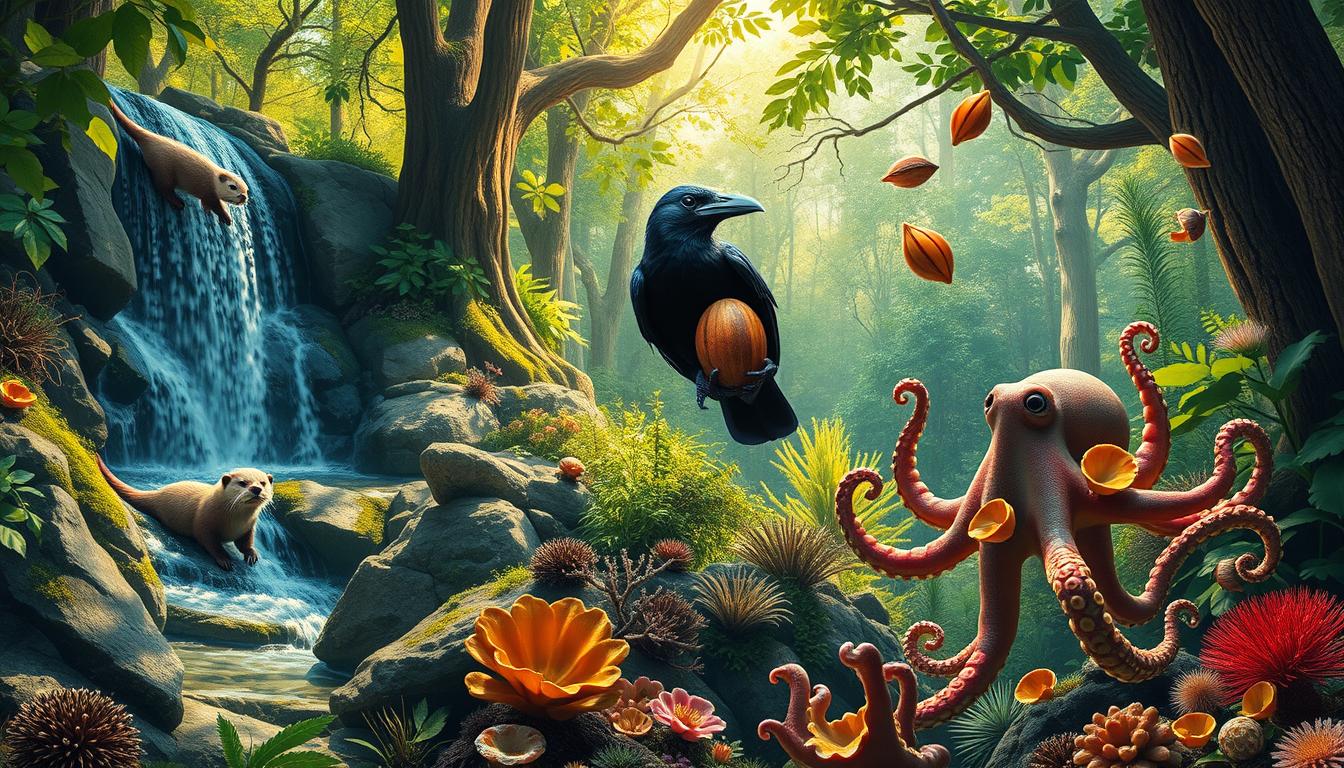
One cool thing about animal intelligence is how they use tools. Chimpanzees use sticks to get termites, showing they can plan ahead. Sea otters crack open shells with rocks, proving they are very resourceful.
“Animals can communicate, solve problems, and even demonstrate self-awareness – abilities long thought to be unique to humans.”
Many animals are also very good at working together. Gorillas and baboons have complex social lives. They have roles in their groups, helping them face challenges and build strong communities.

Exploring animal intelligence keeps surprising us. By learning about their smarts and social lives, we appreciate the beauty of our ecosystems more. It shows us the intricate connections in nature.
Communication Techniques in the Wild
In the vast wilderness adventures, animals have developed many ways to communicate. They use these methods to express themselves, mark territories, and navigate social hierarchies. We delve into the wildlife secrets of the animal kingdom, exploring how they convey information and interact with each other.
Vocalization is a key form of animal communication. Many species, like birds and primates, use calls, chirps, and trills to talk. These sounds can warn of danger, attract mates, or even signal local dialects. This shows the hidden animal lives within their communities.

Animals also use body language and visual signals. A simple posture change or tail flick can mean a lot. Predators use subtle movements to show their intentions, while prey species use body language to show their alertness or fear. These wildlife secrets help keep social order and prevent conflicts.
“The language of the wild is not merely a means of communication, but a symphony of diverse expressions that reveal the innermost thoughts and feelings of the creatures that inhabit our planet.”
Exploring the hidden animal lives of the natural world, we find amazing ways animals communicate. From complex vocalizations to subtle body language, the animal kingdom shows incredible ability to connect and coexist in their habitats.
Unusual Mating Rituals
In the vast and diverse world of nature, the animal kingdom showcases fascinating mating rituals. The Birds of Paradise are known for their elaborate courtship dances. These birds fluff their feathers, spread their wings, and move in intricate ways to attract a mate.
But there’s more to animal behavior than just the Birds of Paradise. For example, spotted hyenas have a unique role reversal. Here, the females are the dominant ones in their social hierarchy. This behavior helps them survive and reproduce, showing the incredible adaptability of nature.
“The natural world is full of unexpected and captivating animal behaviors that defy our expectations. Exploring these biodiversity wonders through nature documentaries is a true window into the remarkable complexity of animal life.”
These unusual mating rituals are not just beautiful to watch. They are also crucial for the survival and reproduction of the species. By understanding their evolutionary significance, we appreciate the intricate balance of nature and the amazing adaptations that have developed over time.

As we explore animal behavior, we discover a world full of biodiversity wonders. From the Birds of Paradise’s courtship displays to the unique social structures of certain species, the animal kingdom amazes and inspires us. It shows us the incredible resilience and adaptability of life on Earth.
Migration Patterns: Why Animals Travel
The natural world is full of amazing wildlife secrets. One of the most fascinating is how animals migrate across the globe. From the Monarch butterfly’s annual trip to the wildebeest migration in Africa, these journeys show animals’ strength and ability to adapt.
Migration is key for many species. It helps them find food, water, and places to breed. As seasons change, animals travel long distances. They go through different ecosystems and face many challenges. The annual wildebeest migration in the Serengeti is a prime example, as these majestic creatures traverse hundreds of miles in search of fresh grazing lands.
 The migration of Monarch butterflies is also amazing. These small insects travel thousands of miles from the United States and Canada to Mexico. They do this to escape harsh winters and find good places to breed and survive.
“The mere sight of these animal migrations is a humbling reminder of the incredible resilience and adaptability of the natural world.”
Exploring the wilderness adventures of animals, we learn about the wildlife secrets that keep ecosystems balanced. By understanding these migrations, we see how animals are connected. They play a crucial role in keeping life’s web intact.
Unique Survival Strategies
In the vast and captivating world of animal behavior, the survival strategies of various species amaze us. These include camouflage and mimicry, crucial for animals to thrive in their habitats. They play a key role in the web of biodiversity.
The leaf-tailed gecko blends into foliage, making it hard to spot. Its color and skin texture are perfect for hiding. The chameleon can change color and pattern, making it almost invisible. These examples show how animals adapt to survive and even excel in their environments.
“The greatest weapon in the arsenal of survival is the ability to adapt and evolve. Nature’s canvas is ever-changing, and the animals that thrive are those that can masterfully blend into its shifting landscapes.”
Mimicry is another fascinating survival strategy. The viceroy butterfly and the king snake look like dangerous species. This trick helps them avoid predators. These strategies highlight the balance and diversity in natural habitats.
Exploring animal behavior shows us their adaptability and resilience. From the camouflaged gecko to the mimicking butterfly, these strategies prove the diversity and wonders of the animal kingdom.
Social Structures in Animal Communities
In the world of wildlife, animal social structures are truly fascinating. They show us how different creatures live and work together. From elephant herds to bird species, these social dynamics help us understand their survival and adaptation.
Elephant herds are a great example of strong family bonds and social hierarchies. The oldest female, often a mother or grandmother, leads the group. She guides them through tough times, ensuring the herd’s survival. This teamwork and intelligence help these animals thrive in their wildlife secrets.
“The social structures of animals are a reflection of their evolutionary adaptations, designed to ensure the survival and success of their species.”
Some bird species also show amazing cooperative breeding. In these groups, birds other than the parents help raise the young. This helps the young birds have a better chance of survival. It shows how animals work together for the good of all, in their ecosystem exploration.
Exploring animal social structures gives us deep insights into nature. These complex social lives help species survive and adapt. They also show the incredible resilience and intelligence of hidden animal lives in our ecosystem exploration.
The Fascinating World of Play
In the world of animal behavior, play is more than just fun. It’s a key part in how young animals grow and learn to get along. Through nature documentaries and wilderness adventures, we see how play is important for many animal species.
Young lion cubs playfully chase each other in the savanna. Dolphins leap together in the ocean. These playful acts are vital for young animals to learn and grow. They practice skills they’ll need as adults, like fighting, exploring, and working together.
“Play is the work of childhood, and it is through play that children learn and develop the skills necessary for adult life.”
Play is not just about physical skills. It also helps young animals learn social skills. They learn to work together, communicate, and build relationships. This prepares them for life as adults, helping them survive and have offspring.
The world of animal play shows how adaptable and strong nature is. By studying these playful behaviors, we appreciate the complexity of animal behavior more. We also learn about the evolution of life on Earth.
Emotional Depth Among Animals
Exploring the world of wildlife secrets, we find the emotional depth in animal lives. Studies show animals, especially primates, can feel empathy. This shows the emotional complexity of our fellow creatures.
Elephants show grief-like behaviors when a herd member dies. They stay near the body, touch it, and even cover it. This shows they understand loss, deepening our respect for them.
“Animals feel emotions just as humans do – they experience joy, sadness, fear, and even a sense of fairness. Recognizing their emotional depth is crucial to understanding the true biodiversity wonders that exist in the natural world.”
Research on animal emotions challenges the idea that only humans have complex feelings. This makes us rethink our connection with nature. It shows the emotional depth in the animals we share our planet with.
The Role of Instinct vs. Learning
In the world of animal behavior, instinct and learning play a big role. Crows are known for solving problems, showing how instinct and learning work together. Some behaviors are passed down through generations, while others are learned from the environment.
Knowing how animals act and learn is key for saving endangered species. By studying their behavior, scientists can find ways to protect them. This helps us create plans that meet each species’ needs, helping them survive threats.
Exploring animal behavior is always interesting, especially the balance between instinct and learning. By understanding this, we can help animals and learn more about nature. This knowledge helps us protect animals and make a difference in their lives.